

Options screeners and scanners
An options screener reduces a large market to a research list. Four common types cover flow, chain parameters, volume and open-interest change, and volatility. Each answers a different question, so choosing the right type matters.
- Pages on this topic
- 23
- Where to start
- Read the scanner category page first to work out which type you need, then the specific screener page, then the tool guide for the dashboard that does the job.
- Applies to
- US-listed stock and ETF options
- Purpose
- Independent research and education
Screening is a narrowing step, not a conclusion
A result surviving a filter means it passed the filter. It does not mean the trade behind it was informed, directional, or opening rather than closing. Ranking by premium finds the largest money committed; ranking by volume finds the largest contract counts, and those two lists rarely agree.
Read the supporting context
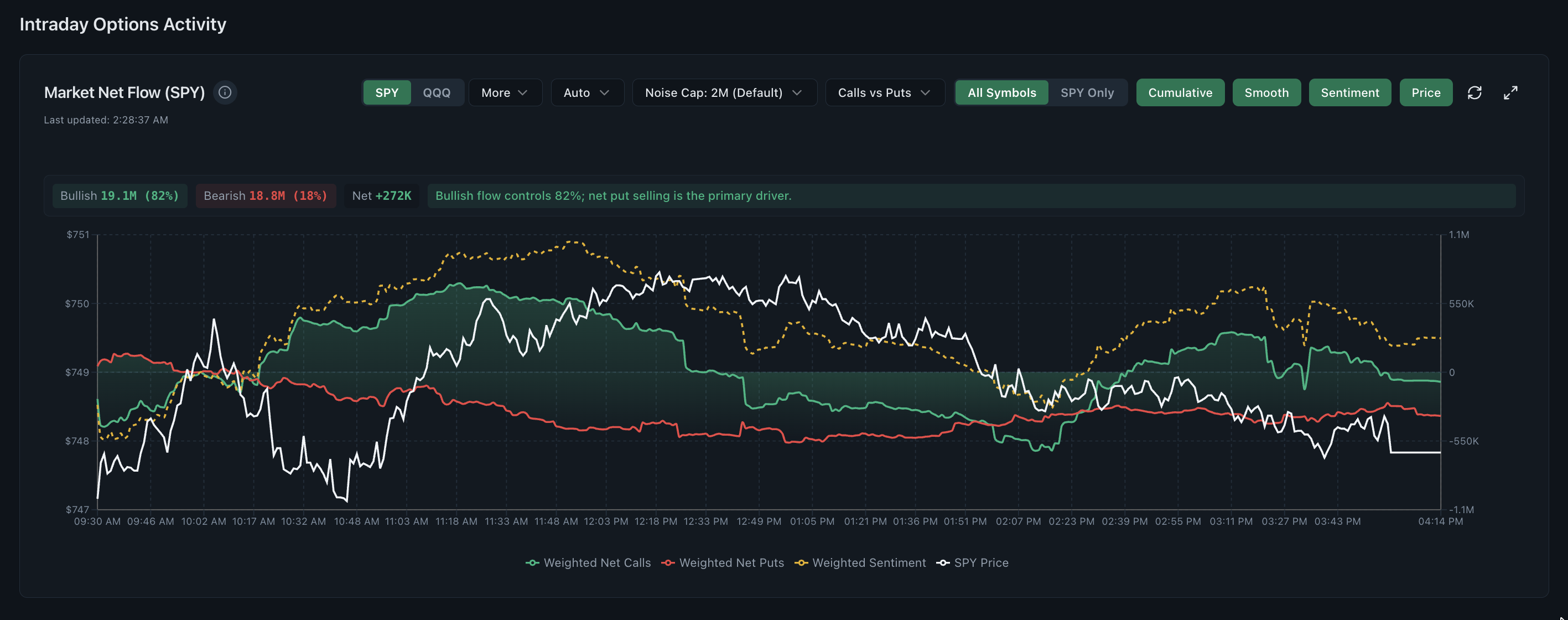
Realtime Options is flow-first: it screens executed activity and then supplies the strike, expiry, open interest and exposure context needed to interpret a result. It does not screen the chain by delta, implied volatility rank or spread width, and it does not rank strategies by expected return.
Concept guides
- Option finder tools: what each 'finder' query actually meansOption finder is not one product.
- Covered call screener: what it screens and how to read itA covered call screener ranks call options you could sell against shares you already own, usually by premium received, return if the stock is unchanged, return if the shares are called away, an annualised equivalent of those returns, and the downside buffer the premium provides.
- Cash-secured put screener: collateral, yield and assignmentA cash-secured put screener ranks put options you could sell while holding the full strike value in cash, usually by premium, return on that collateral, an annualised equivalent and the effective purchase price if you are assigned.
- Unusual options activity: meaning, scanner and real-time checksUnusual options activity (UOA) is options trading that differs from a relevant ticker, contract or time-window baseline in volume, premium, trade count, execution structure or repeated activity.
- Best options flow data tools for trading decisionsThe best options flow data tool is the one that matches your research job and exposes enough context to challenge its own alerts.
Screens, tools and comparisons
- Options flow scannerAn options flow scanner ranks live options prints so unusual size surfaces on its own instead of being hunted for.
- Options screener for flow, strikes and unusual activityAn options screener reduces a large options market to the contracts and tickers worth researching.
- Free options scanner tool: what you can use without payingA genuinely free options scanner usually provides delayed activity, a limited contract screen or real-time quotes inside a funded brokerage account.
- Real-time options flow with call, put and price contextReal-time options flow is a continuously updated research view of executed options activity organized by contract, premium, strike, expiry and estimated execution location.
- Options flow tracker for sessions, history and contextAn options flow tracker records how premium, volume, trade count and put/call activity change over time.
- Options scanner: the four types and which one you needAn options scanner is software that watches the US options market and surfaces contracts or tickers that meet a condition, so activity worth reviewing appears without reading the chain by hand.
- Free options screener: what free means, tool by toolA free options screener is usually free in one of five different ways: bundled with a funded brokerage account, published free but delayed 15 to 30 minutes, freemium with the useful filters withheld, free for a fixed trial period, or genuinely free forever with a limited feature set.
- High premium options screener: two opposite meaningsHigh premium options screener describes two opposite searches.
- Best options screener: an honest evaluation, August 2026There is no single best options screener, because the category contains three incompatible products.
- Options volume scanner: reading a volume spike correctlyAn options volume scanner ranks contracts and tickers by how much trading occurred, usually against their own recent average, so unusually active strikes surface without reading the chain by hand.
- Options trading and analysis tools, organized by jobThe options research toolkit divides into seven jobs: reading the chain and quotes, tracking flow and unusual activity, mapping positioning and dealer exposure, measuring volatility, modelling a strategy's payoff, following news and the calendar, and reviewing your own past decisions.
- Options strategy scannerAn options strategy scanner searches an option chain for multi-leg structures that match a target payoff, credit or probability, then ranks the candidates.
- Best options flow scanner: 11 tools compared by use caseThere is no universal best options flow scanner.
Dashboard guides
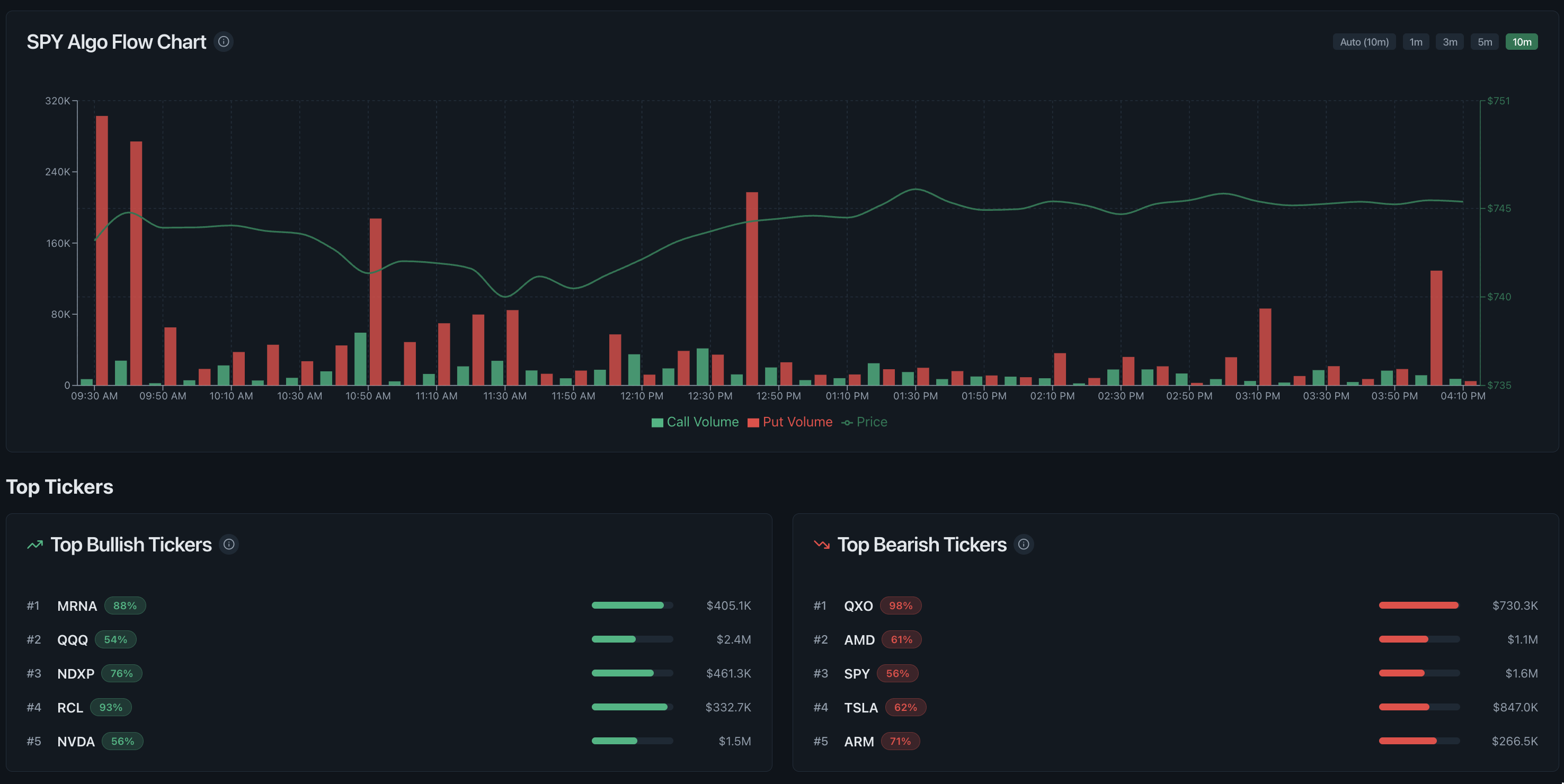
- Algo Flow and Top Tickers dashboardThe Algo Flow and Top Tickers dashboard compares call and put volume through the session with the underlying price and ranked ticker activity.
- Options Volume Change scannerThe Options Volume Change scanner ranks symbols whose classified options activity changed most within the selected comparison window.
- Contract Activity ReviewContract Activity Review plots options contracts using classified premium, urgency, sweep share, persistence and recency, then records whether defined historical comparison conditions were met.
Applied workflows and method posts
Common questions
Is there a genuinely free options screener?
Yes. Broker-bundled screeners and public tools from Barchart and exchange sites cover chain-parameter screening at no cost. Free flow screening is rarer and is usually delayed, sampled or trial-limited. The pages below explain the available options and their limits.
What is the difference between a screener and a scanner?
In practice the words are used interchangeably. On this site, screening means filtering contracts by their characteristics, and scanning means watching executed trades as they print. The distinction matters because the two produce different lists from the same market.