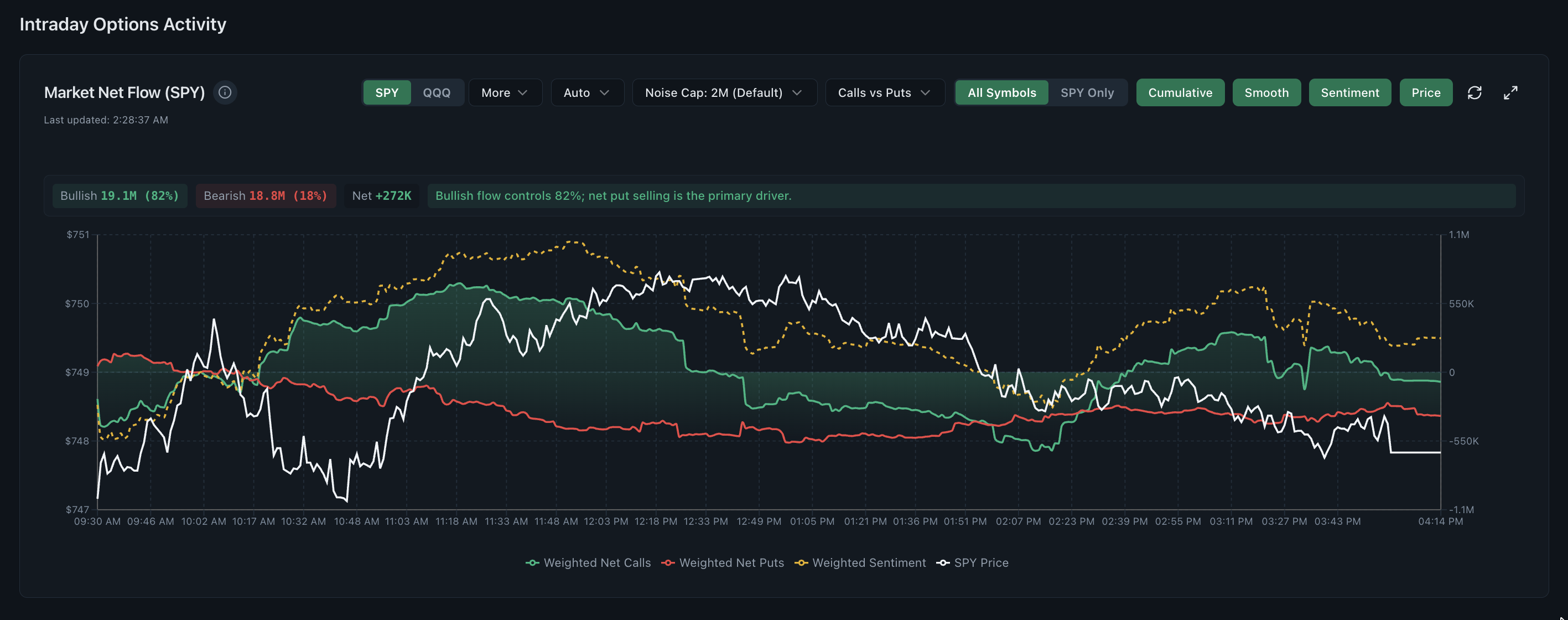


Best options screener: an honest evaluation, August 2026
There is no single best options screener, because the category contains three incompatible products. For chain-parameter screening, Barchart, Market Chameleon and a funded broker's own scanner are the strongest general answers checked in August 2026. For premium-yield screening, the specialists are the dedicated wheel-strategy tools such as optionDash. For executed flow and premium concentration, the flow platforms including Realtime Options apply. Realtime Options is not a chain screener and should not be chosen as one.
- Snapshot date
- Checked August 2026; verify vendor pages
- Three product types
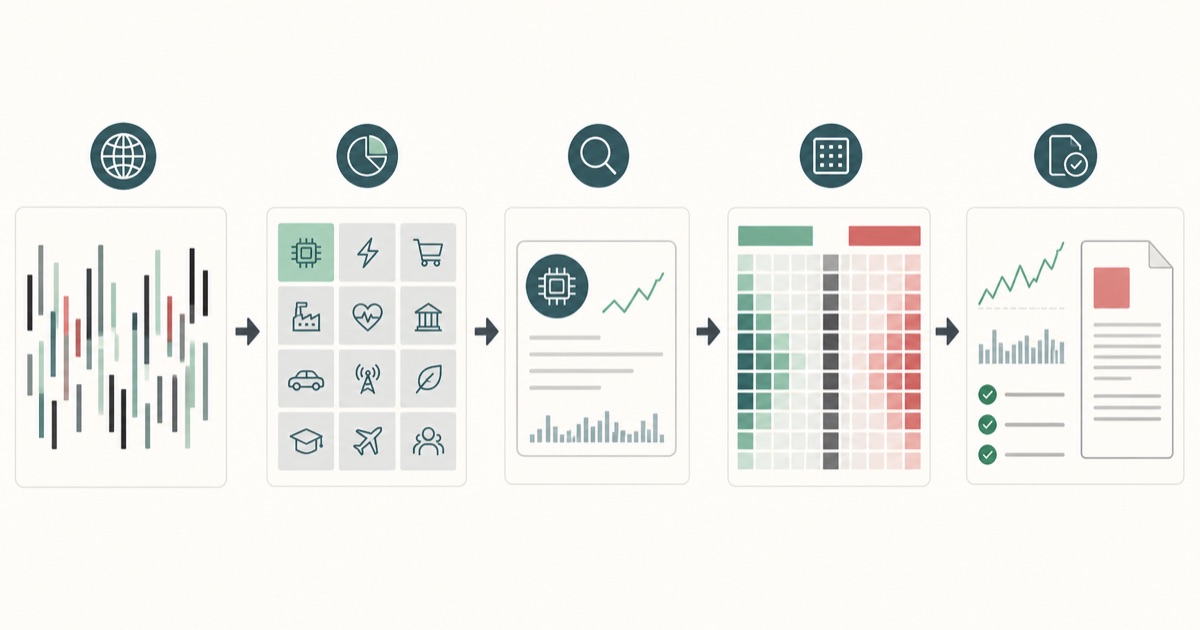
- Chain-parameter, premium-yield and flow
- Observed price range
- Free tiers to about $149/month
- Realtime Options
- $29/month flow research, not a chain screener
- Commercial disclosure
- No affiliate arrangement with any product listed
- Trademarks
- All product names belong to their respective owners
Best for what? Define the job before the tool
Options screener is a single phrase covering three products that do not compete with each other. Asking which is best without naming the job produces an answer that is wrong for two thirds of readers.
Read the supporting context
Decide which of the three sentences below describes your search, then read only the relevant rows of the table that follows.
- Chain-parameter screening: find contracts matching delta, days to expiry, open interest, implied volatility and spread rules.
- Premium-yield screening: find contracts paying well relative to collateral, usually for covered calls or cash-secured puts.
- Flow and volume screening: find where executed transactions and premium concentrated today, and at which strikes.
An evaluation framework you can apply yourself
Rankings age badly and free tiers change without notice. A framework survives longer than a verdict, so these are the questions worth asking of any screener before paying for it.
Read the supporting context
The single most useful question is the one almost no comparison asks: what is the data delay, stated as a number? A vendor disclosing a 25 to 30 minute delay is more trustworthy than one claiming real-time without qualification.
- Does it screen the chain, the tape or both? These are different datasets.
- What is the stated data delay, in minutes, on the tier you would actually buy?
- Which filters are withheld from the free tier, and are those the ones you need?
- Can you save a screen, export results and see what it returned in the past?
- Does it require a funded brokerage account, an email address or nothing at all?
- Does the product state what it cannot tell you, or only what it can?
Named comparison, checked August 2026
The table lists the job each product does best and the public price observed. Pricing and features change frequently, so treat every row as a dated snapshot and confirm on the vendor's own page.
| Screener | Strongest job and price snapshot, August 2026 |
|---|---|
| Barchart | Broad general chain screening; free tier with options data disclosed as delayed roughly 25 to 30 minutes, paid tier listed near $30/month |
| Fidelity market scanner | Chain screening for account holders; free with a funded account, no market-wide flow |
| thinkorswim Option Hacker | Deep custom chain filters in a desktop platform; free with a funded Schwab account |
| Market Chameleon | Earnings, volatility and event-driven screening; free tier plus a paid tier listed near $99/month |
| Option Samurai | Pre-built strategy screens with a time-limited trial; listed in the $35 to $59/month range |
| optionDash | Covered-call and cash-secured-put yield screening; free tier with an account |
| OptionVisualizer | Free chain screening with a large filter set and no card required |
| OptionStrat | Strategy building and payoff diagrams, with flow on higher tiers |
| Unusual Whales | Broad flow plus screening breadth; listed in the $44 to $50/month range |
| Realtime Options | Executed flow, premium concentration, GEX and open-interest context; $29/month after a 3-day no-card trial on 15-minute delayed data |
Choose something else instead if
Recommending against your own product where it does not fit is the only way a comparison page is worth reading. These are the cases where Realtime Options is the wrong purchase and something on the list above is the right one.
| If you need | Choose instead |
|---|---|
| Delta, DTE, IV and spread filters on the chain | Barchart, a funded broker scanner or OptionVisualizer |
| Covered-call or cash-secured-put yield ranking | A dedicated wheel screener such as optionDash |
| A payoff diagram or strategy builder | OptionStrat or a broker platform with strategy tools |
| Implied volatility rank or percentile screening | Market Chameleon or a broker scanner with IV history |
| Order entry and execution | A brokerage; Realtime Options has no broker connectivity |
| A broad or raw-data API, or a mobile app | A licensed data vendor or mobile-first product |
The price ladder, and what each rung buys
Assembling the ladder in one place is more useful than any ranking, because price in this category tracks breadth of dataset rather than quality of screening. The rungs below reflect public prices observed in August 2026.
| Observed monthly price | What that rung typically buys |
|---|---|
| $0 | Delayed chain screening, broker-bundled scanners or a small permanent free feature set |
| About $20 to $30 | Entry paid tiers: fresher data, saved screens and a fuller filter set |
| About $35 to $60 | Mid-tier screeners with pre-built strategy screens and volatility history |
| About $44 to $99 | Flow platforms adding executed trade data, exposure analytics and history |
| About $100 to $149 | Alert-led products bundling dark-pool equity data and notification systems |
Where Realtime Options loses
Realtime Options wins on one narrow thing: connecting executed flow to strike-level premium concentration, gamma exposure, open interest, price and news inside one $29 monthly plan with a no-card trial. It loses on almost everything a traditional screener buyer wants.
Read the supporting context
It is research and education software. It is not a registered investment adviser or broker-dealer, it produces no buy or sell signals, and nothing in it should be read as a recommendation.
- No chain-parameter screening and no IV rank or percentile screening.
- No covered-call or cash-secured-put premium screening by yield.
- No options strategy builder and no payoff diagrams.
- No backtesting, no raw or unrestricted chain-data API and no native mobile app; the interface is responsive web only. Pro includes limited read-only aggregated analytics API access.
- No dark-pool equity data and no raw option-chain quote screen.
The limit every screener on this list shares
No screener in any tier resolves the four questions that decide what a result means. This is a property of the public data, not a gap in any particular product, and any tool implying otherwise is overclaiming.
Read the supporting context
Open interest, the one field that would confirm whether positioning actually grew, updates once daily after the close through OCC and never intraday, from any vendor.
- Whether the volume in a contract was bought or sold to open.
- Whether a transaction opened a new position or closed an existing one.
- Whether a print was one leg of a spread, a roll or a hedge.
- Who the counterparty was and what else they hold.
Common questions
What is the best options screener overall?
There is no overall winner because the category holds three incompatible products. Checked August 2026, Barchart and a funded broker's own scanner cover general chain screening, dedicated wheel tools such as optionDash cover premium yield, and flow platforms cover executed activity. Match the product to the job first.
What is the best free options screener?
For chain screening with no account, Barchart's free tier and OptionVisualizer are the common answers, with Barchart disclosing its options data as delayed roughly 25 to 30 minutes. If you hold a funded brokerage account, the broker's own scanner is usually the strongest free option available to you.
How much does an options screener cost?
Observed August 2026: free tiers exist, entry paid plans run about $20 to $30 per month, mid-tier screeners about $35 to $60, flow platforms about $44 to $99, and the most expensive alert-led products up to about $149. Realtime Options is $29 per month.
What should an options screener be able to do?
A complete screener filters delta, days to expiry, implied volatility rank or percentile, open interest, volume, bid-ask width, premium relative to capital at risk and an annualised equivalent, and it excludes expiries containing a scheduled earnings report. Free tiers most often omit IV rank, the earnings filter and saved screens.
Can I use my broker's built-in screener instead of a paid one?
For chain screening, usually yes. Fidelity, thinkorswim, Interactive Brokers and tastytrade all include capable scanners at no extra cost on a funded account. Their limitation is scope rather than quality: they screen the chain, not market-wide executed flow or cross-ticker premium concentration.
Is Realtime Options the best options screener?
No, and it is not a chain screener at all. It screens executed flow and premium concentration and adds strike, exposure, open-interest, price and news context. If your requirement is delta and DTE filtering or premium-yield ranking, another product on this page is the correct choice.
Is this comparison sponsored or affiliate-driven?
No. Realtime Options has no affiliate arrangement with any product named here. Every price and feature is a dated August 2026 snapshot taken from public vendor pages, and vendors change both without notice, so verify before purchasing.
Sources and further reading
Competitor names and trademarks belong to their respective owners. Realtime Options is not affiliated with or endorsed by the companies compared here. Features and prices are dated snapshots from linked official pages; verify them before purchasing.