

Method notes on reading options data
Practical method notes for reading options data without turning one print into a signal. Each post examines a common misreading, the fields that resolve it and the limits that remain.
- Format
- Method posts, one misreading each
- Posts
- Seven, each extending a guide or product explanation
- Purpose
- Independent options-data research and education
- Data behind the posts
- Licensed third-party US options data, not a direct exchange feed
- Update rule
- Revised when the method or the source data changes, not on a schedule
What is a Realtime Options method post?
A method post starts from a specific claim people make about options data, shows the arithmetic or market mechanics that make the claim unreliable, and then gives the narrower statement the data does support. It is a correction to a reading habit, not a commentary on the market.
Read the supporting context
That constraint is deliberate. A post about how open interest settles overnight stays useful for years. A post about what happened in the market last Tuesday stops being useful on Wednesday and quietly turns into a track record nobody agreed to publish.
- One misreading per post, named in the title.
- The mechanics that produce it, with worked numbers where arithmetic is the point.
- The fields you would need to add before the reading becomes defensible.
- An explicit statement of what remains unresolved even after every check.
- A link to the Learn guide the post builds on, so the definitions are not repeated here.
What keeps the method posts focused?
Each post stays with a reusable measurement question rather than a dated market opinion. Realtime Options publishes the material as research and education content alongside its analytics software.
Read the supporting context
There are also no recycled definitions. If a post needs the definition of open interest, gamma exposure or a sweep, it links to the Learn guide that already covers it rather than restating it to pad the page.
- Reusable methods instead of dated market recaps.
- Measurement mechanics instead of ranked contract or ticker lists.
- Observed fields separated from estimates and unknowns.
- Links to existing Learn definitions instead of duplicated explanations.
Which options-data misreadings do the seven posts address?
Each post is named for the mistake it addresses, so the index doubles as a list of the failure modes most likely to appear in a flow-based research routine.
| Post | The misreading it takes apart |
|---|---|
| How to read a week of SPY options flow | Treating five sessions as five independent readings instead of one record that gets rewritten overnight |
| What the 0DTE share of volume means | Reading a rising 0DTE share as a sentiment or risk-appetite signal rather than a calendar change |
| Why options volume alone misleads | Treating a contract count as evidence of conviction without trade count, premium or open-interest change |
| Reading put flow without assuming bearish | Mapping put volume onto a bearish view when protection, collars, rolls and put selling all print the same way |
| Premium versus contract count | Comparing tickers by contracts printed when the money committed can differ by two orders of magnitude |
| How to read sector options flow | Treating the highest-ranked sector or ticker as a conclusion instead of checking breadth, price, strikes and expiries |
| How to read an open interest heatmap | Combining once-daily cleared open interest with intraday flow as if both measurements update on the same clock |
How do the method posts differ from the Learn guides?
The Learn guides define the terms. The blog posts assume those definitions and go one level further into the mechanics that make a term easy to misapply in practice. If a post feels like it is starting mid-argument, the linked guide is the missing first half.
| Blog post | Guide it assumes |
|---|---|
| How to read a week of SPY options flow | How to read options flow |
| What the 0DTE share of volume means | 0DTE options and same-day positioning |
| Why options volume alone misleads | Options volume versus open interest |
| Reading put flow without assuming bearish | Call versus put options flow |
| Premium versus contract count | Options volume versus open interest |
| How to read sector options flow | How to read options flow |
| How to read an open interest heatmap | Options volume versus open interest |
How should readers use a method post?
Read the post once for the mechanic, then apply it as a checklist the next time the same data appears on screen. The value is in catching the misreading before a story forms around it, which is much harder once a number has already been interpreted out loud.
Read the supporting context
None of the posts require a subscription to follow. They describe fields that appear in most options data products, not features exclusive to one dashboard.
- Identify which measurement you are about to interpret: volume, premium, open interest, share of volume or side.
- Apply the decomposition the post describes before assigning any direction to it.
- Write down the explanations you could not rule out, not only the one you preferred.
- Treat the remaining ambiguity as part of the result rather than an inconvenience to be resolved.
What can the data behind these posts actually settle?
The posts are written against near-real-time US-listed stock and ETF options activity from a licensed third-party vendor, not a direct exchange feed. The trade record is factual: contract, size, price, timestamp and where the print landed relative to the quote. Everything layered on top of that, including side, opening or closing status and sentiment, is an estimate.
Read the supporting context
Open interest is a separate dataset with its own cadence. It is published once daily after the close by OCC and is never available intraday from any vendor, which is why several of these posts turn on the difference between what you can see now and what you can only confirm tomorrow.
- Observed: contract, strike, expiry, size, price, timestamp and quote context.
- Estimated: aggressor side, opening versus closing, spread legs and derived sentiment.
- Modelled: gamma exposure and any level derived from it.
- Unavailable: trader identity, portfolio context, intent and future price.
Common questions
What does the blog publish?
It publishes educational method notes explaining how options data behaves, which fields support a reading and where the available evidence remains incomplete.
How is the blog different from the Learn guides?
The Learn guides define concepts such as options flow, open interest, sweeps and gamma exposure. The blog assumes those definitions and works one level further into the mechanics that make each concept easy to misapply, so every post links back to the guide it builds on.
Why are there no dated market recaps?
A recap of a specific week becomes an implied track record the moment it is published, and it stops being useful almost immediately. Method posts describe mechanics that stay true across market regimes, which is the only kind of writing that is honest to leave online indefinitely.
Do the posts use live market data?
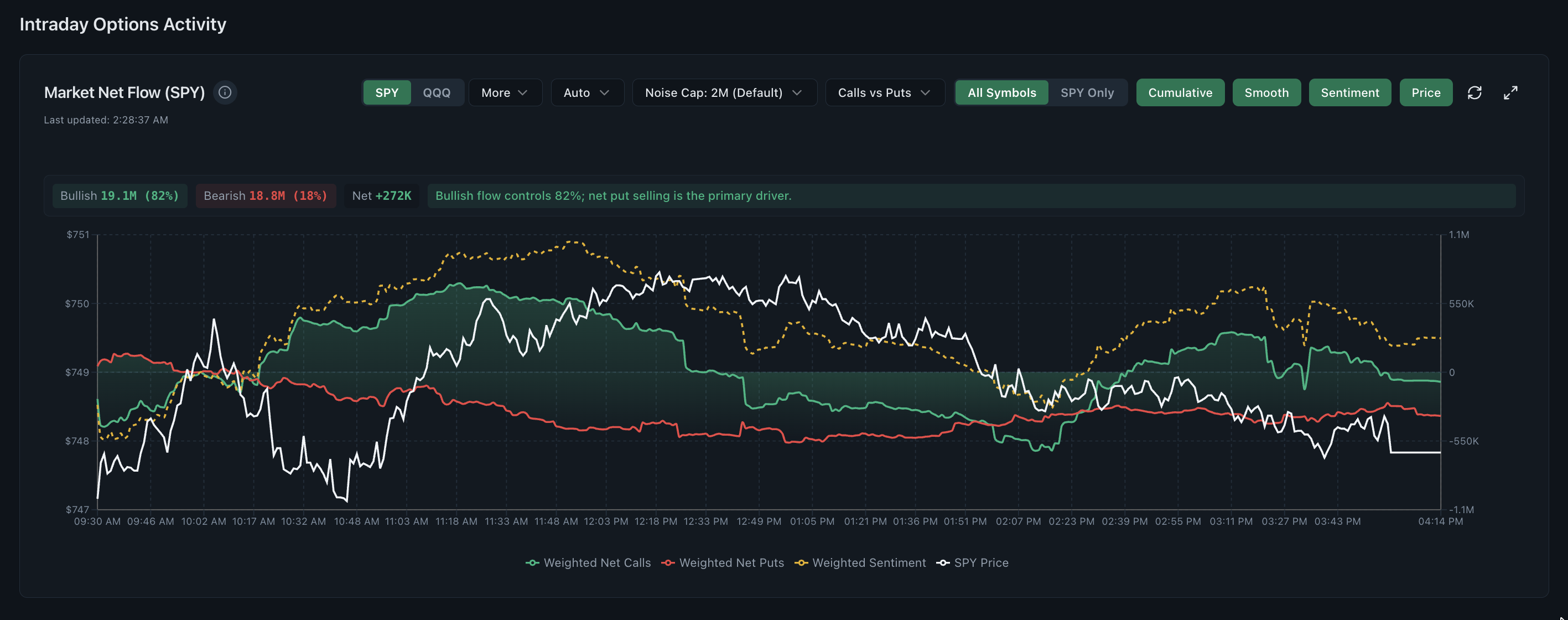
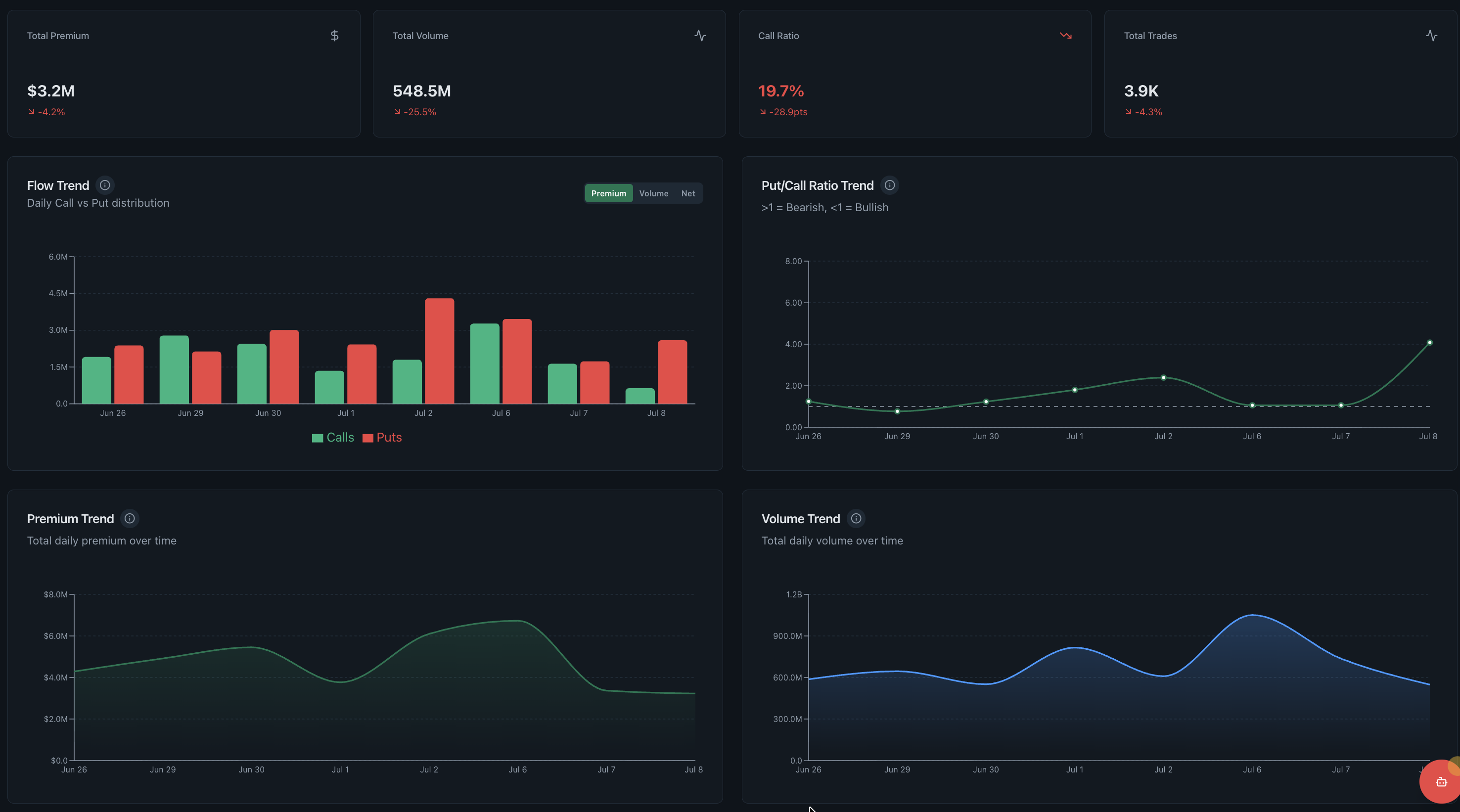
The screenshots are historical captures from the product, dated to the session shown, and the worked examples are arithmetic rather than observed trades. Live near-real-time data sits inside the dashboards, not inside the blog.
Can I receive these posts through an API or a data feed?
The posts are web pages, not an API feed. Realtime Options Pro has authenticated, read-only Public API v1 endpoints for aggregated Buy/Sell Pressure, Algo Flow, 0DTE Flow & Gamma Exposure, and Greeks by Strike analytics, but they do not expose blog content, raw exchange data or unrestricted option-chain data. There is also no backtesting engine or native mobile application.
How often does a new method post appear?
New posts appear when a specific misreading is worth a full explanation, not on a fixed publishing schedule. Existing posts are revised when the underlying method or a cited source changes, and the update date on the page reflects that revision rather than a routine refresh.