

Options research topics
This is the topic index for everything published on Realtime Options. Each topic page carries its own framing, what the subject is, the mistake it most often produces, and the order to read it in, before it lists the pages underneath it.
- Topics
- 11
- Coverage
- Concepts, screens, dashboards, workflows and method posts
- Method
- Fact first, interpretation second, limits always
- Output
- Definitions, methods and research context
Browse by topic
Each topic below is a separate reading path rather than a keyword bucket. If you are new to options data, start with calls and puts, then options flow, then open interest, in that order the rest of the site makes sense.
- Options flow research libraryThis options flow topic index connects the definition, reading sequence, scanner comparisons, dashboard guides and applied method posts.
- Options screeners and scannersAn options screener reduces a large market to a research list.
- Calls and putsA call gives its buyer the right to buy 100 shares at the strike before expiry; a put gives its buyer the right to sell.
- Options strategiesAn options strategy is a combination of contracts chosen to express a specific view about direction, volatility or time.
- 0DTE options and gamma exposureZero-days-to-expiry options expire the same session, so their sensitivity concentrates around the current price and decays through the day.
- Open interestOpen interest is the number of contracts still outstanding at a strike and expiry after clearing.
- Free options tools and dataFree options tools fall into four groups: bundled with a funded brokerage account, publicly published by exchanges and the OCC, freemium tiers with a delay or a cap, and time-limited trials.
- Options platforms and pricingAn options trading platform is a broker: it holds your account, routes your orders and settles your trades.
- Options research workflowsThe same dashboards support very different routines depending on the horizon.
- Options market structureMost disagreements about what options data means are really disagreements about market structure: who clears the trade, who is obliged to hedge it, and what the public tape does and does not carry.
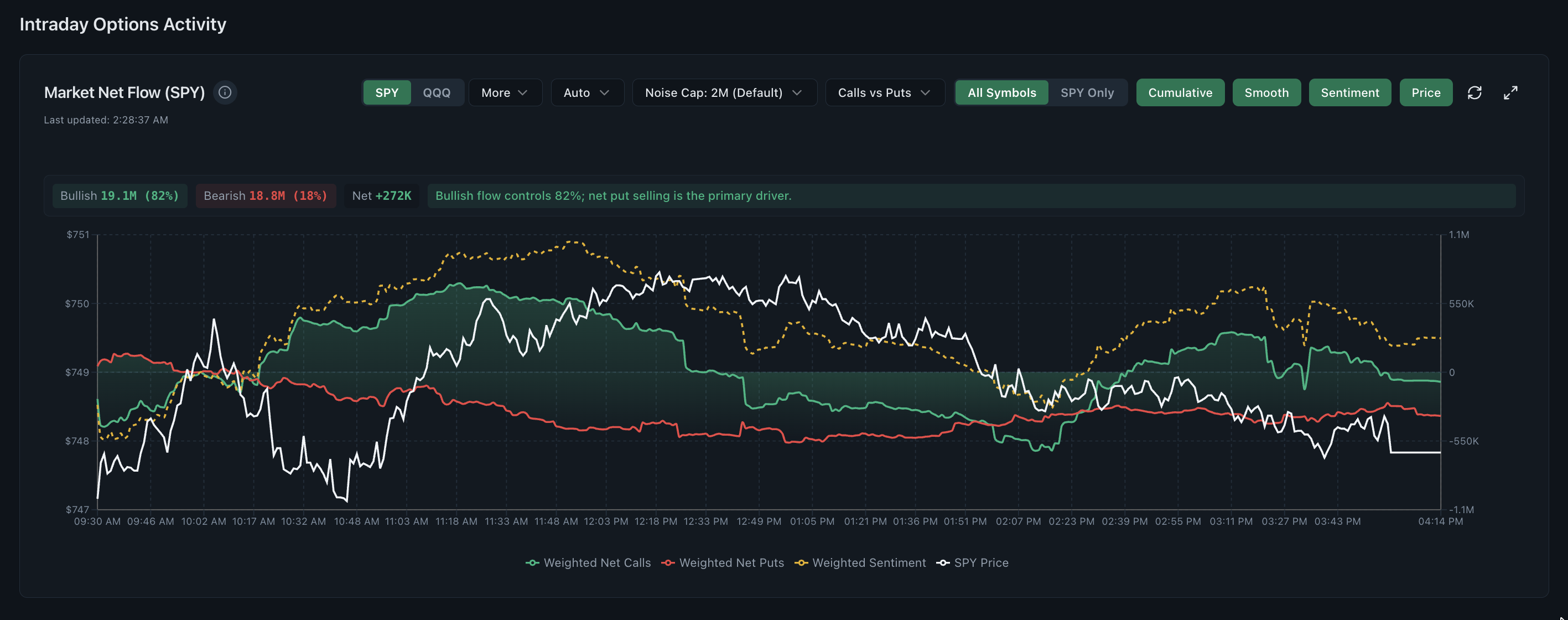
- Dashboard and research-view guidesTen core dashboards and eight specialist research views, each documented with a real screenshot.
What every topic page has in common
The framing is written, not generated. Each page states the specific misreading its topic produces, because that is the part a link list cannot give you and the part that changes how the data gets used.
Read the supporting context
The library documents market-data measurements and research methods for independent study. Each page separates observed fields from estimates and modeled outputs.
Common questions
How are these topics chosen?
From the research questions the pages actually answer, not from keyword groupings. A topic appears only when at least three substantive pages sit under it, which is why the list is short.
Where should a beginner start?
Calls and puts, then options flow, then open interest. Those three cover the contract mechanics, what the tape records, and what settles overnight, everything else on the site assumes them.