

Options research workflows
The same dashboards support very different routines depending on the horizon. An intraday reader and a multi-week swing reader look at different screens in a different order and treat the same print differently. These pages set out the routines step by step, including the checkpoints where the honest answer is that the data does not say.
- Pages on this topic
- 10
- Where to start
- Pick the workflow matching your horizon, then follow its links into the concept guides and dashboard guides it depends on.
- Applies to
- US-listed stock and ETF options
- Purpose
- Independent research and education
A routine is not an edge
A repeatable process reduces the number of decisions made on impulse. It does not make the underlying inference more certain, and none of these workflows produce a signal, a probability or a recommendation.
Read the supporting context
Latency matters to how far a routine can be pushed. Trial data is fifteen minutes delayed and Pro is near-real-time rather than an execution-grade feed, which makes these research workflows rather than execution workflows.
Concept guides
- My Market options watchlistAs of August 27, 2026, My Market is the Realtime Options watchlist workspace.
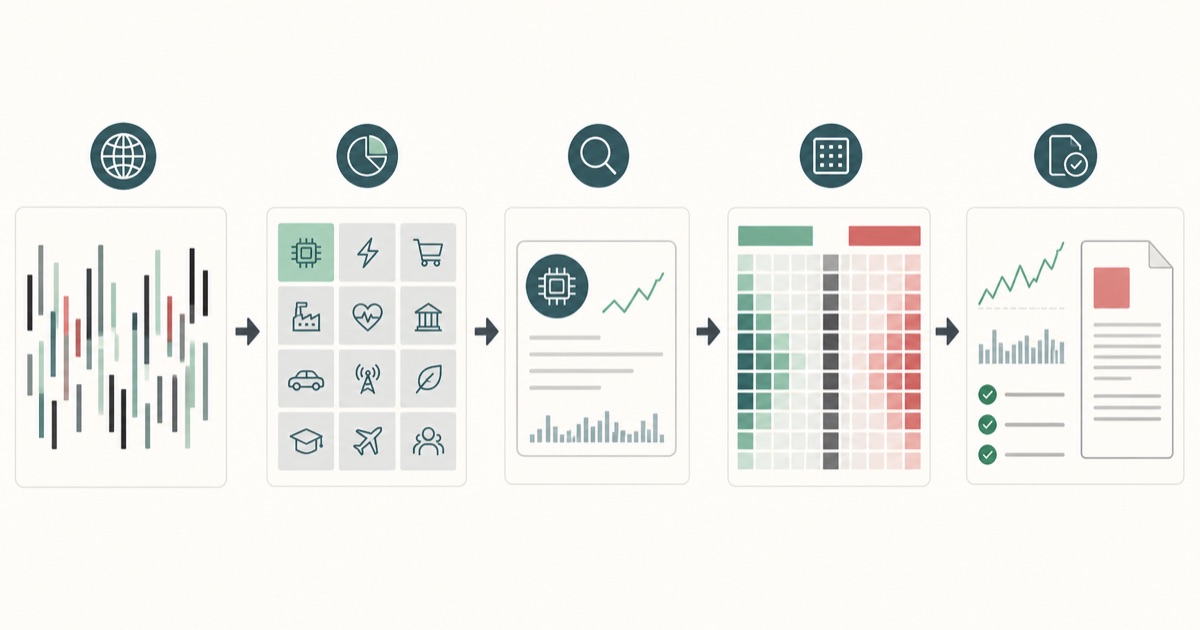
- A repeatable options research workflowA practical options research workflow narrows from the whole market to a sector, ticker, strike and contract, then broadens again for price, positioning and catalyst checks.
- QQQ options flow researchQQQ options flow is executed activity in options on the Invesco QQQ ETF, organized by call and put, strike, expiry, premium and execution.
- Best options flow data tools for trading decisionsThe best options flow data tool is the one that matches your research job and exposes enough context to challenge its own alerts.
Applied workflows and method posts
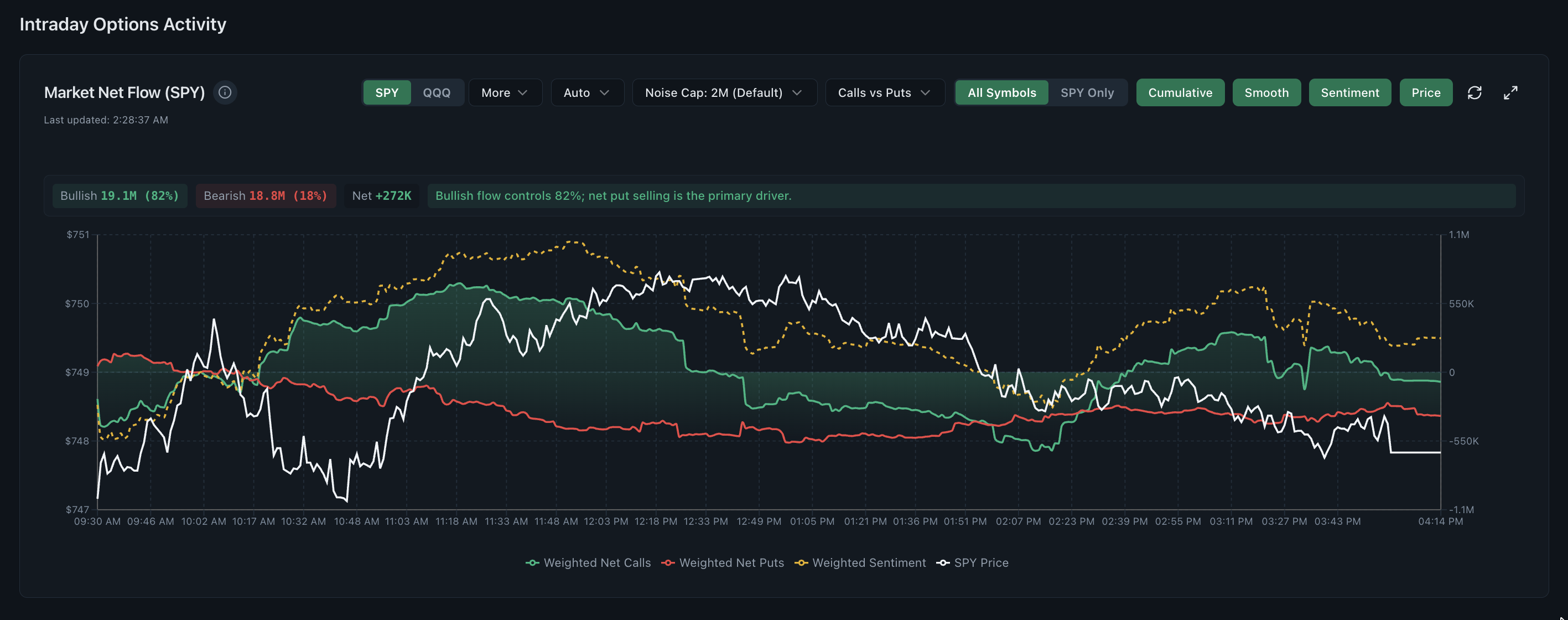
- Day trading options flow: an intraday research routineAn intraday options flow routine divides the session into four windows: pre-open context, the opening 30 minutes, midday and the closing hour.
- Swing trading options: a multi-session flow routineA swing options research routine reads positioning that accumulates across sessions rather than reacting to a single print.
- 0DTE options research: same-day gamma and same-day risk0DTE options research studies contracts expiring the same trading day, where gamma concentrates tightly around the current price and the entire position resolves within hours.
- Earnings options flow: reading positioning before the printPre-earnings options flow shows that market participants are positioning around a scheduled event; it does not show that anyone knows the result.
- SPY and QQQ options flow: index context before single namesSPY and QQQ options flow reads differently from single-stock flow because a large share of it is hedging rather than speculation, same-day expiries take a much larger share of volume, there is no company-specific catalyst, and dealer positioning in these products is unusually concentrated.
Common questions
Do these workflows work on the free trial?
Yes, with a 15-minute delay on the data. Everything in the routines is visible; the timing is behind. That is workable for swing and study routines and a real constraint on intraday ones.
Are these workflows trading systems?
No. They are research routines describing which screen to read in what order. They contain no entry rules, no exit rules, no position sizing and no performance claims.