

A repeatable options research workflow
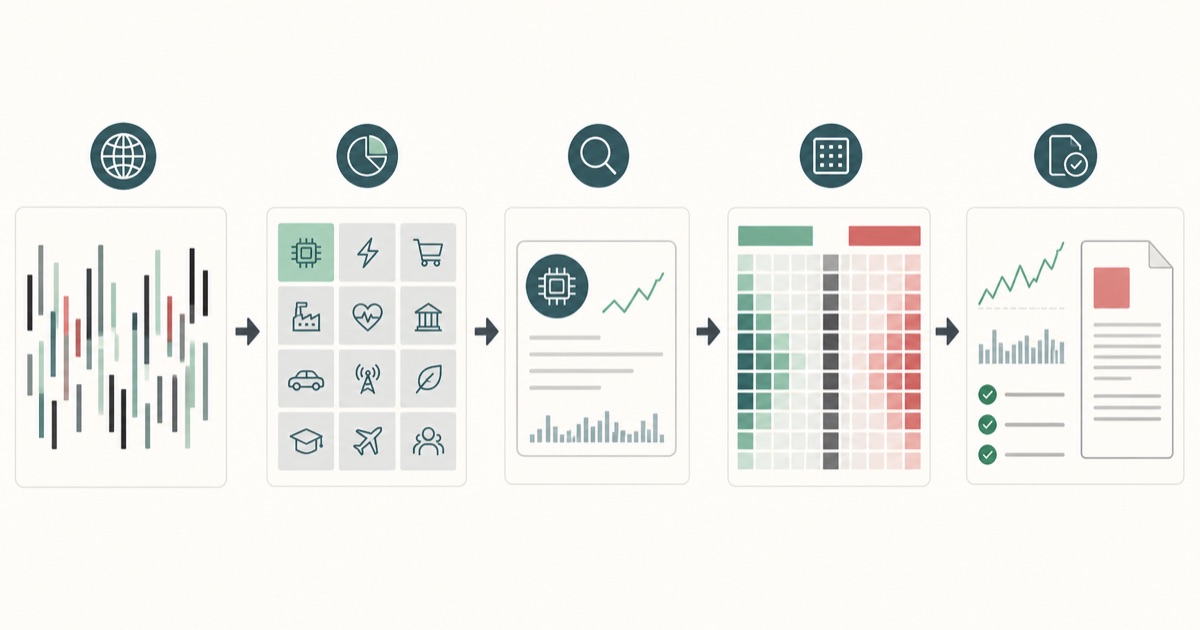
A practical options research workflow narrows from the whole market to a sector, ticker, strike and contract, then broadens again for price, positioning and catalyst checks. The sequence controls attention: each step earns the right to move deeper, and conflicting evidence can stop the process before an isolated print becomes a thesis.
- Stage 1
- Market-wide flow and price
- Stage 2
- Sector and ticker ranking
- Stage 3
- Strike, expiry and contract execution
- Stage 4
- Positioning, history, price and catalyst
Stage 1: write the market backdrop
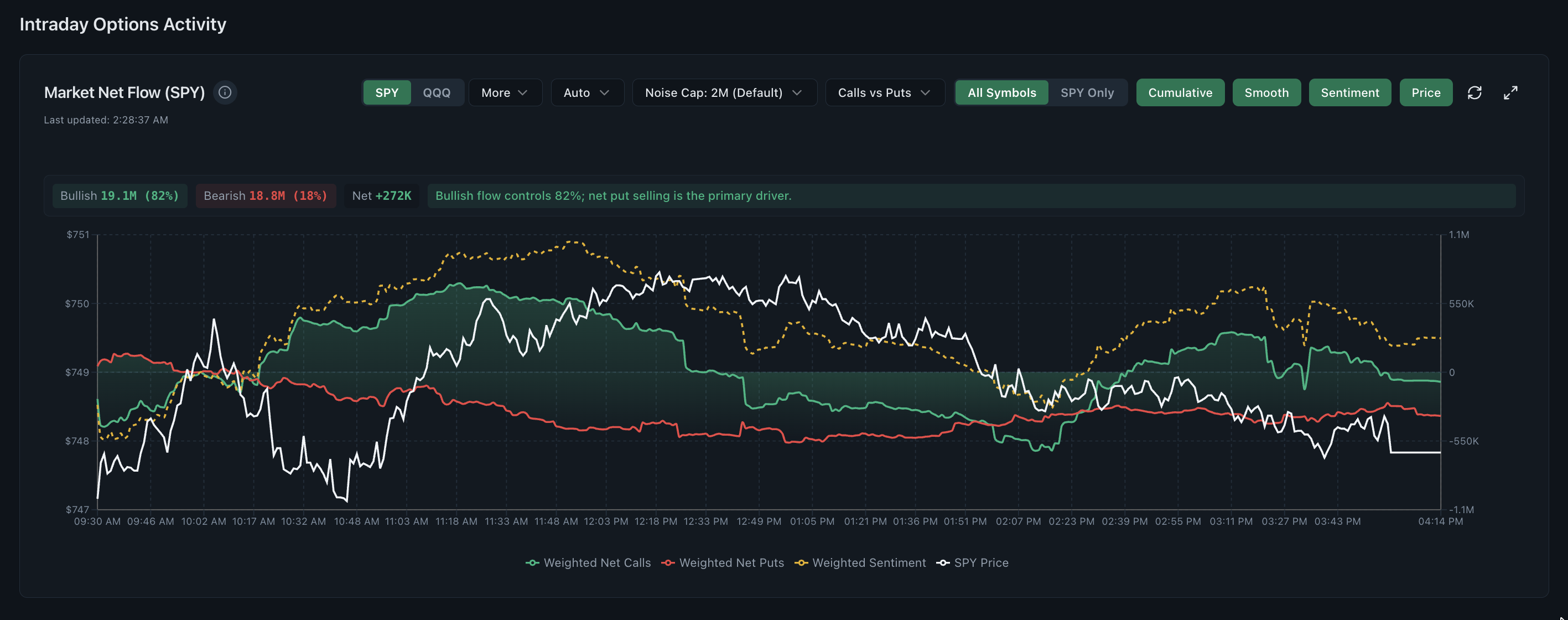
Record call-versus-put pressure, net premium and index price before opening a single-name alert. The note can be simple: call-led and confirming, put-led and confirming, divergent, or mixed.
Stages 2-3: narrow to ticker, strike and contract
Use sector and ticker rankings to select a small research queue. For each name, inspect strike, expiry, premium, execution location, volume and trade count. Search nearby strikes and timestamps for spread legs before describing direction.
Stage 4: try to disprove the first reading
Compare current activity with open interest, historical flow and the underlying price. Then check earnings, macro events and reported news around the timestamp.
Read the supporting context
A useful final note includes what is known, what is estimated, what conflicts and what information will update later. That structure reduces hindsight editing and confidence inflation.
- Known: contract, execution, size, premium, time and current price response.
- Estimated: aggressor side, derived sentiment, gamma exposure and potential hedging mechanics.
- Unknown: beneficial owner, full portfolio, undisclosed legs and intent.
- Later update: next open-interest figure, subsequent price action and additional public news.
Common questions
How many steps should an options research workflow have?
The number matters less than preserving the sequence from broad market context to contract detail and back to independent verification. Four grouped stages are enough for a repeatable process.
Why start market-wide instead of with a ticker?
The market backdrop changes how ticker-specific activity should be interpreted and reduces the attention bias created by the largest or newest alert.
When should the workflow stop?
Stop when the evidence is insufficient, conflicting or outside your competence. A research process can produce an unresolved note without producing a trade idea.