

How to read sector options flow
Sector options flow groups executed options activity by market sector, then compares call- and put-side premium across the group and its active tickers. Read it as a breadth check: note whether activity is shared across related names, whether the sector ETF shows similar behavior, and where the premium sits by strike and expiry.
- Unit
- A sector group and the tickers contributing to it
- First check
- Breadth across several related names
- Second check
- Sector ETF, price, strike and expiry context
- Ranking field
- Classified premium, not company quality
- Unknown
- Trader identity, full structure and intent
What does sector options flow measure?
Sector options flow aggregates classified options activity for companies or ETFs assigned to the same market group. The group supplies context: it shows whether activity is spread across related names or concentrated in one ticker.
Read the supporting context
A sector label is a classification, not a natural law. GICS uses a standardized hierarchy of sectors, industry groups, industries and sub-industries, while a dashboard may use a similar grouping adapted to the symbols it covers. Compare like with like when reviewing two products.
Why can one ticker distort a sector ranking?
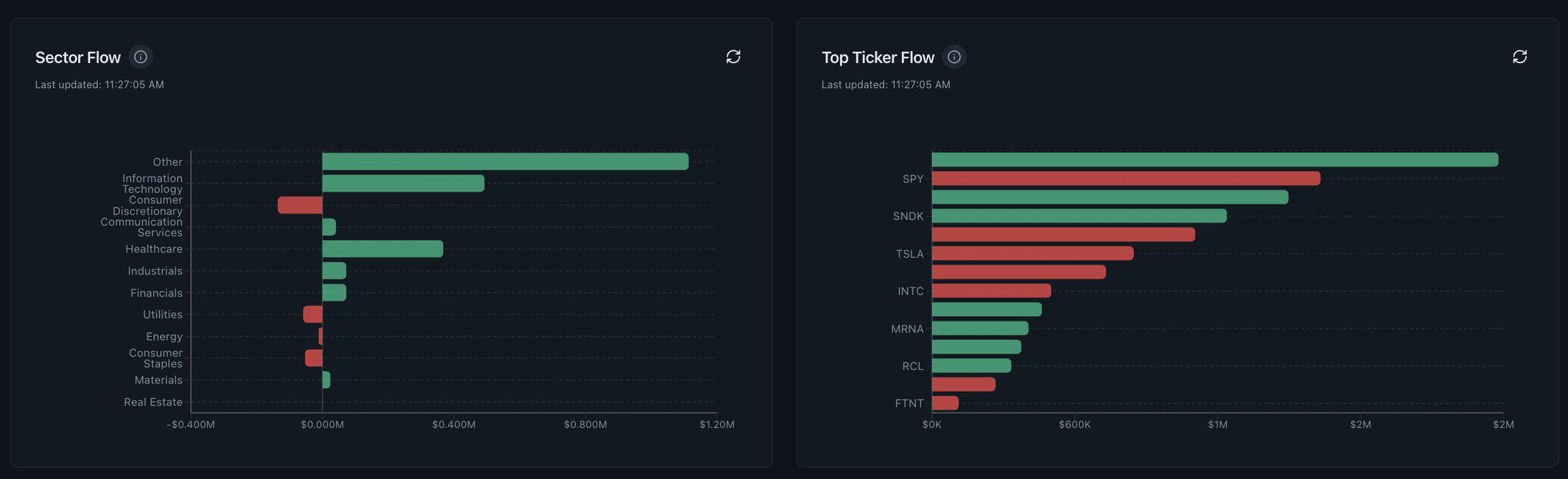
One liquid or high-priced options name can contribute most of a sector's premium. The sector bar then looks broad even when the underlying activity came from one company, one expiry or one large print.
- Count how many related names contribute meaningful premium.
- Compare premium with trade count so one block is not mistaken for broad participation.
- Check whether the sector ETF appears in the same window.
- Compare the leading ticker with its own usual activity rather than a market-wide threshold.
How should a sector options flow review run?
Move from broad to narrow and keep the observations separate. The aim is a short research list with visible context, not a directional label for the sector.
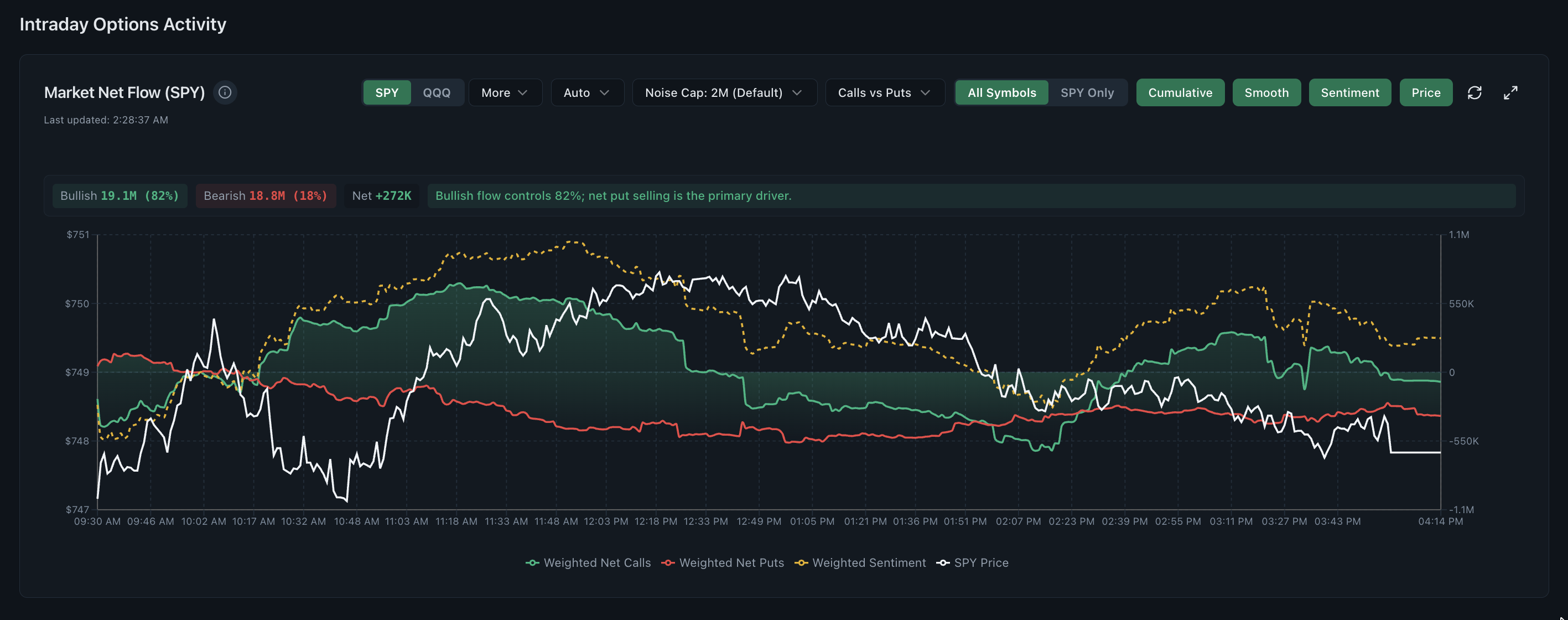
- Start with market-wide call and put activity and underlying index price.
- Find sectors where activity is shared across more than one related name.
- Compare the sector ETF with its largest contributing tickers.
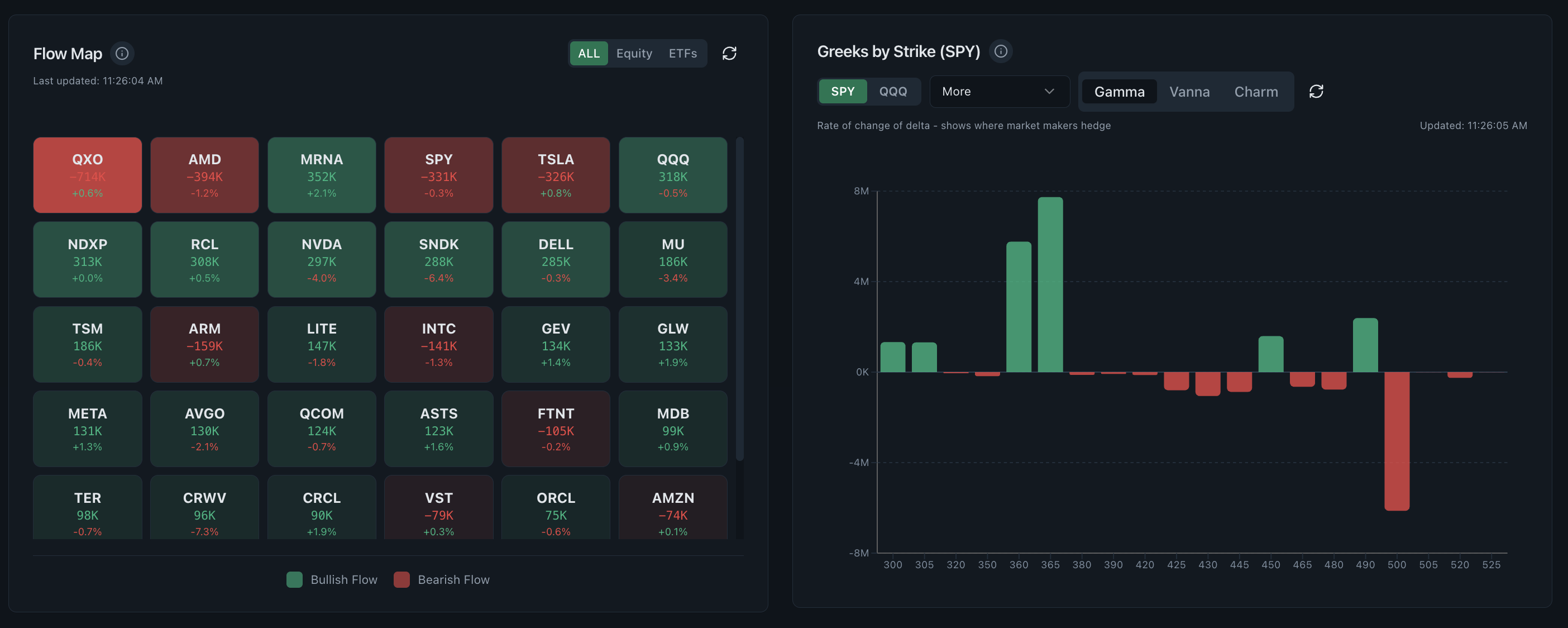
- Open strike and expiry views for the names that remain.
- Check price, published open interest and reported catalysts before writing a summary.
How do sector ETFs and single names differ?
A sector ETF represents a basket, while a single-name option references one company. ETF activity can relate to basket hedging, allocation or relative-value structures, so it should be treated as group context rather than proof that every constituent shares the same view.
Read the supporting context
Agreement is still useful as a description. If the ETF and several major constituents show similar classified activity, breadth is wider than one isolated print. If they disagree, the disagreement is part of the result.
What can sector options flow not establish?
A sector ranking cannot identify the participant, reveal the rest of a multi-leg position or forecast the next sector move. It records and organizes completed activity. The useful output is a better-scoped research question and a transparent list of the checks that support or contradict it.
Common questions
What is sector options flow?
Sector options flow is executed options activity grouped by market sector and summarized across the tickers inside each group. It is mainly a breadth and prioritization view.
Does the top sector have the strongest outlook?
No. It has the highest value under the selected ranking method for that window. One ticker, expiry or block can dominate, so breadth and context still need to be checked.
Should sector flow be ranked by contracts or premium?
Premium is easier to compare across contracts with very different prices, while contract count shows activity volume. Use both with trade count because neither explains structure or intent alone.
Why compare a sector ETF with its component tickers?
The comparison shows whether activity is group-wide or isolated. ETF activity can also reflect basket hedging, so agreement adds breadth context without proving a shared directional position.
Where can I view sector options flow in Realtime Options?
The Sector Options Flow dashboard groups market activity and ranks contributing tickers. It is included in the three-day delayed-data trial and the $29 monthly Pro plan.