

Options screener for flow, strikes and unusual activity
An options screener reduces a large options market to the contracts and tickers worth researching. Realtime Options screens market-wide call and put activity, ranks unusual premium and active tickers, and then connects each result to strike, expiry, open interest, gamma exposure and price context. It is a research screen, not a buy-or-sell signal generator.
- Screens
- US-listed stock and ETF options
- Ranks
- Premium, volume, repeat activity and ticker flow
- Checks
- Strike, expiry, open interest, GEX and price
- Does not do
- Issue signals, execute orders or predict returns
What an options screener should screen
A useful options screener filters activity that is expensive to review manually, not activity that merely looks dramatic. Start with ticker and expiry, then add premium, contract volume, trade count, ask-versus-bid location and repeat activity at the same strike.
Read the supporting context
The word screen matters: the output is a smaller research set. A result still needs chain and market context before it supports any conclusion.
- Ticker and product type: separate index and ETF flow from single-stock activity.
- Premium and contract count: distinguish money committed from the number of contracts printed.
- Ask, mid and bid: estimate how aggressively the contract traded without treating that estimate as certainty.
- Strike and expiry: identify whether activity is concentrated or spread across the chain.
- Repeat prints and trade count: separate one block from a sequence of smaller transactions.
Options screener versus options flow scanner
An options screener is the broader category; an options flow scanner is one specific screen inside it. A chain screener may filter implied volatility, delta, days to expiry or spread width, while a flow scanner starts with executed trades and premium direction.
Read the supporting context
Realtime Options is flow-first. It helps you find where options activity is clustering, then opens the heat grid, open-interest view, Greeks-by-strike chart and contract history needed to study the result.
| Screen | Best used for |
|---|---|
| Options flow scanner | Executed trades, unusual premium, sweeps and blocks |
| Option-chain screener | Contract characteristics such as delta, IV, DTE and spread |
| Stock screener | Underlying company, price, volume and fundamental filters |
| Realtime Options | Flow-first screening plus strike, exposure and history context |
A four-step screening workflow
The shortest defensible workflow is market, ticker, contract, context. Skipping straight to the contract is faster, but it also removes the evidence most likely to contradict an exciting print.
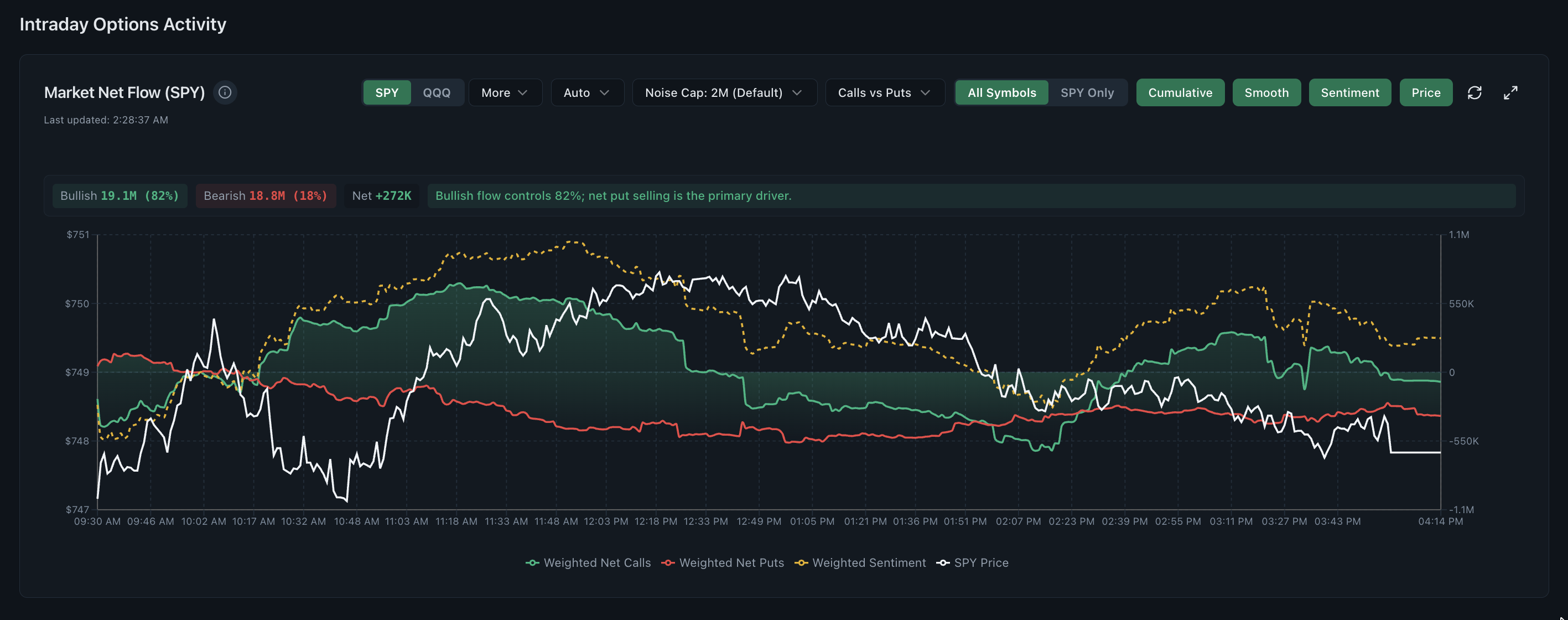
- Read market-wide weighted net flow to establish the session backdrop.
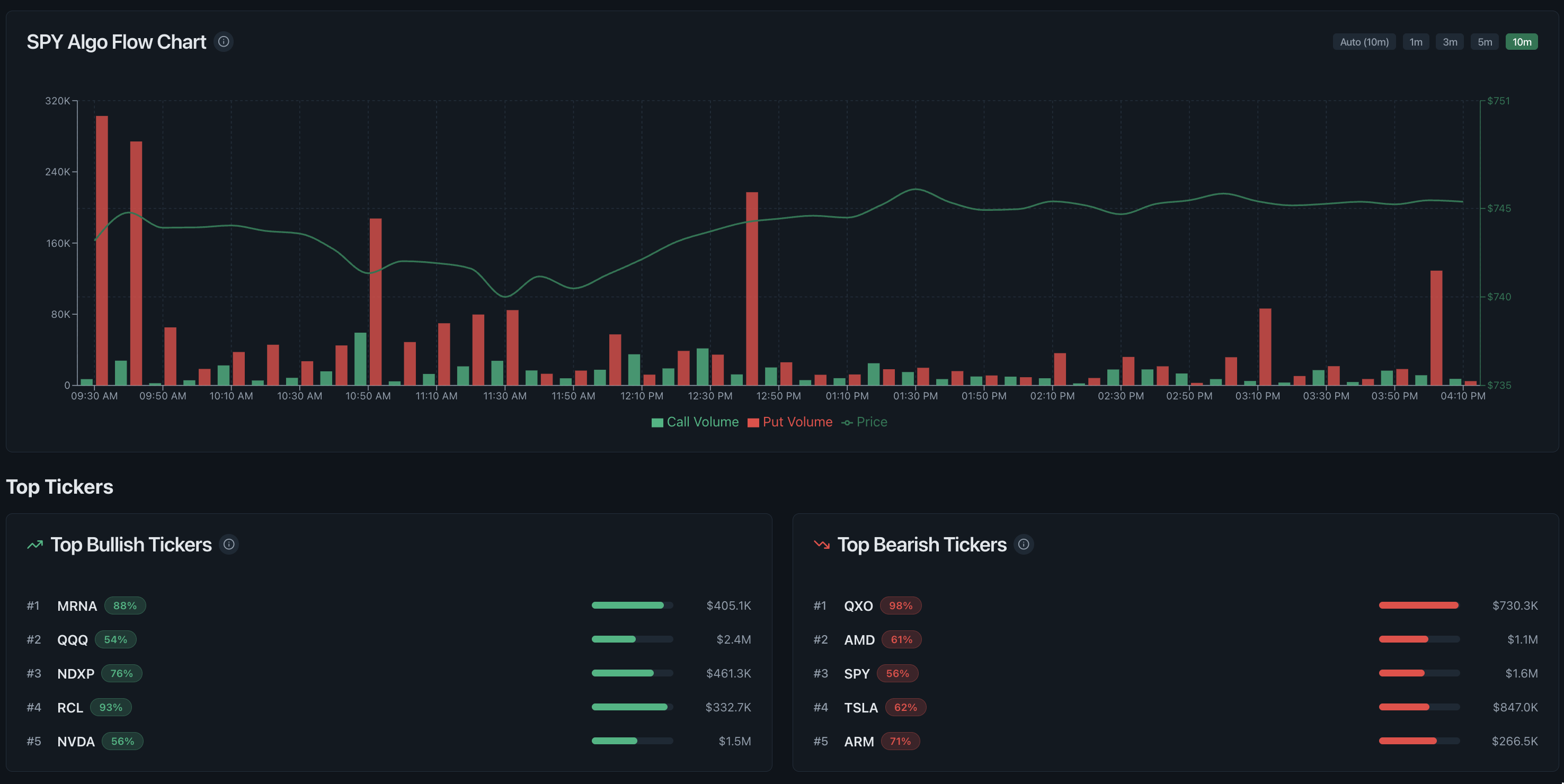
- Use sector and top-ticker rankings to narrow the watchlist.
- Screen prints inside those tickers by premium, side, strike and expiry.
- Check price, open interest, GEX, historical flow and current news before recording a view.
Common questions
What is an options screener?
An options screener filters a large set of contracts or trades using criteria such as ticker, strike, expiry, premium, volume, open interest or Greeks. Its job is to create a manageable research list, not to make a trading decision for you.
Is an options screen the same as an options scanner?
People often use the terms interchangeably. Screener usually implies user-selected filters, while scanner often implies continuous monitoring for predefined events such as unusual premium, sweeps or repeat prints.
Can I use the options screener free?
The 3-day trial includes all screening dashboards on 15-minute delayed market data with no card required. Near-real-time Pro access is $29 per month; there is no permanent free real-time tier.