

Call options explained
A call option gives its buyer the right, not the obligation, to buy 100 shares of the underlying at a fixed strike price on or before expiration, in exchange for a premium paid to the seller. The seller keeps that premium and accepts the obligation to deliver the shares if assigned. Buying a call and writing a call are opposite trades with opposite risk profiles, and both add identically to the call volume reported in market data.
- Contract size
- 100 shares per standard US equity or ETF call
- Buyer pays
- Quoted premium times 100, plus fees
- Buyer's maximum loss
- The premium paid
- Uncovered writer's risk
- Theoretically unlimited
- Value components
- Intrinsic value plus extrinsic (time and volatility) value
- Open interest timing
- Updated once daily after the close by OCC, never intraday
What a call option gives the buyer
A call option buyer holds the right to buy 100 shares of the underlying at the strike price at any time up to expiration for a standard American-style US equity option. The buyer is never obliged to exercise; if the right is worthless at expiration, it simply lapses.
Read the supporting context
The contract is defined by four fields, and every quoted call price refers to that exact combination. Two calls on the same stock with different strikes or expirations are different instruments with different sensitivities.
- Underlying ticker: the stock or ETF the contract references.
- Strike price: the price at which the buyer may purchase the shares.
- Expiration date: after which the right no longer exists.
- Style and settlement: standard US equity and ETF options are physically settled in shares; many index options are cash-settled instead.
- Multiplier: 100 shares, so a call quoted at $2.40 costs $240 per contract before fees.
Buying a call versus writing a call
Buying a call and writing a call are the two sides of the same contract, and the risk is not symmetric. The buyer commits a known amount and can lose all of it. The writer collects a known amount and, if the position is uncovered, has no defined ceiling on the loss.
Read the supporting context
Both sides appear in the same call volume number. That is the single most common misreading of options data: a large call print tells you a contract traded, not that somebody bought it expecting the stock to rise.
| Action | What it means and what it risks |
|---|---|
| Buy to open a call | Pays premium, gains the right to buy; loss capped at the premium |
| Sell to open a call, covered | Collects premium against shares already held; caps upside above the strike |
| Sell to open a call, uncovered | Collects premium with no shares held; loss theoretically unlimited |
| Sell to close a long call | Exits an existing long call; prints as call volume with no new directional view |
Covered calls versus uncovered calls
A covered call is written against 100 shares of the underlying already held per contract, so assignment means delivering shares the writer owns. An uncovered or naked call is written without those shares, so assignment means buying them at whatever the market price happens to be.
Read the supporting context
The distinction is the difference between a capped-upside income position and a position with theoretically unlimited loss. Broker approval levels reflect this: writing uncovered calls typically requires a higher options approval tier and additional margin.
- Covered call: caps gains above the strike, keeps the premium, still carries the full downside of holding the shares.
- Uncovered call: keeps the premium, faces unbounded loss if the underlying rises sharply.
- Assignment is not optional for the writer and can occur before expiration on American-style contracts.
- Early assignment risk rises when a call is deep in the money and its remaining extrinsic value is small.
- Neither structure is a recommendation here; Realtime Options does not screen contracts by premium yield or run a covered-call scanner.
Intrinsic value, extrinsic value and decay
A call's price splits into intrinsic value, the amount by which the underlying exceeds the strike, floored at zero, and extrinsic value, which is everything else the market is paying for time remaining and expected movement.
Read the supporting context
Extrinsic value erodes as expiration approaches and shrinks when implied volatility falls. A call buyer can be right about direction and still lose money if the move is too slow or if implied volatility drops after the position is opened.
| Price component | What drives it |
|---|---|
| Intrinsic value | Underlying price minus strike, never below zero |
| Extrinsic value | Time to expiration, implied volatility, rates and dividends |
| Theta effect | Extrinsic value decays toward zero as expiration approaches |
| Vega effect | A fall in implied volatility reduces extrinsic value even if price is unchanged |
Assignment and early exercise around dividends
Exercise is the buyer's choice; assignment is what happens to a writer selected against that exercise. For American-style US equity calls, exercise can occur on any business day up to expiration, and assignment is allocated by clearing procedures rather than by anything the writer controls.
Read the supporting context
The recurring early-exercise case for calls is the day before a stock goes ex-dividend. A holder of a deep in-the-money call with very little remaining extrinsic value may exercise to capture the dividend, which means the writer of that call is at elevated risk of assignment on that specific date.
- Check the ex-dividend date for any short call position in a dividend-paying name.
- The comparison that matters is the call's remaining extrinsic value against the dividend amount.
- Assignment on a covered call delivers shares already held; assignment on an uncovered call creates a short stock position.
- Broker automatic-exercise thresholds and cut-off times differ; confirm them with your broker rather than assuming.
- The Options Industry Council publishes the mechanics of assignment in detail, and the OCC disclosure document sets out the risks.
What call flow shows, and what it does not
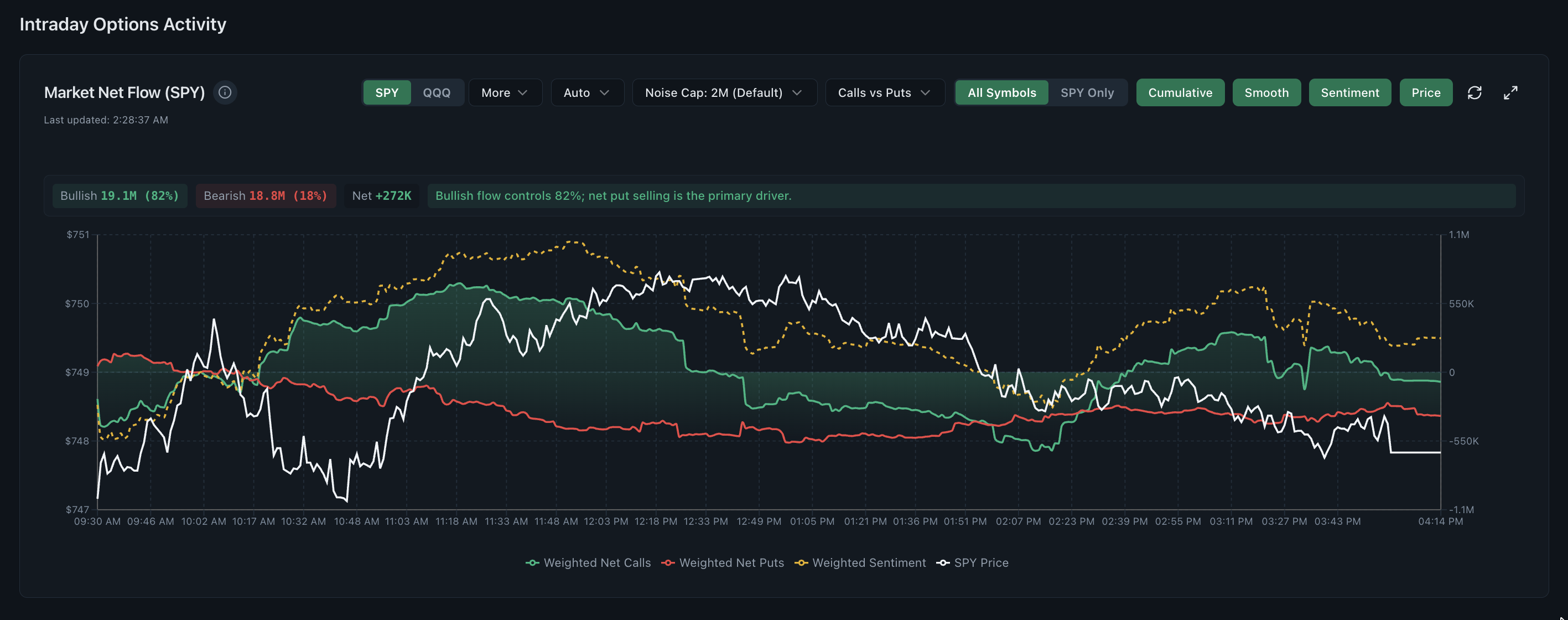
Call flow is the record of executed call transactions organized by ticker, strike, expiry, size, premium, timestamp and position relative to the bid and ask. It documents that a trade occurred and roughly how aggressively it was executed. It does not identify who traded, why, or whether the position opened or closed.
Read the supporting context
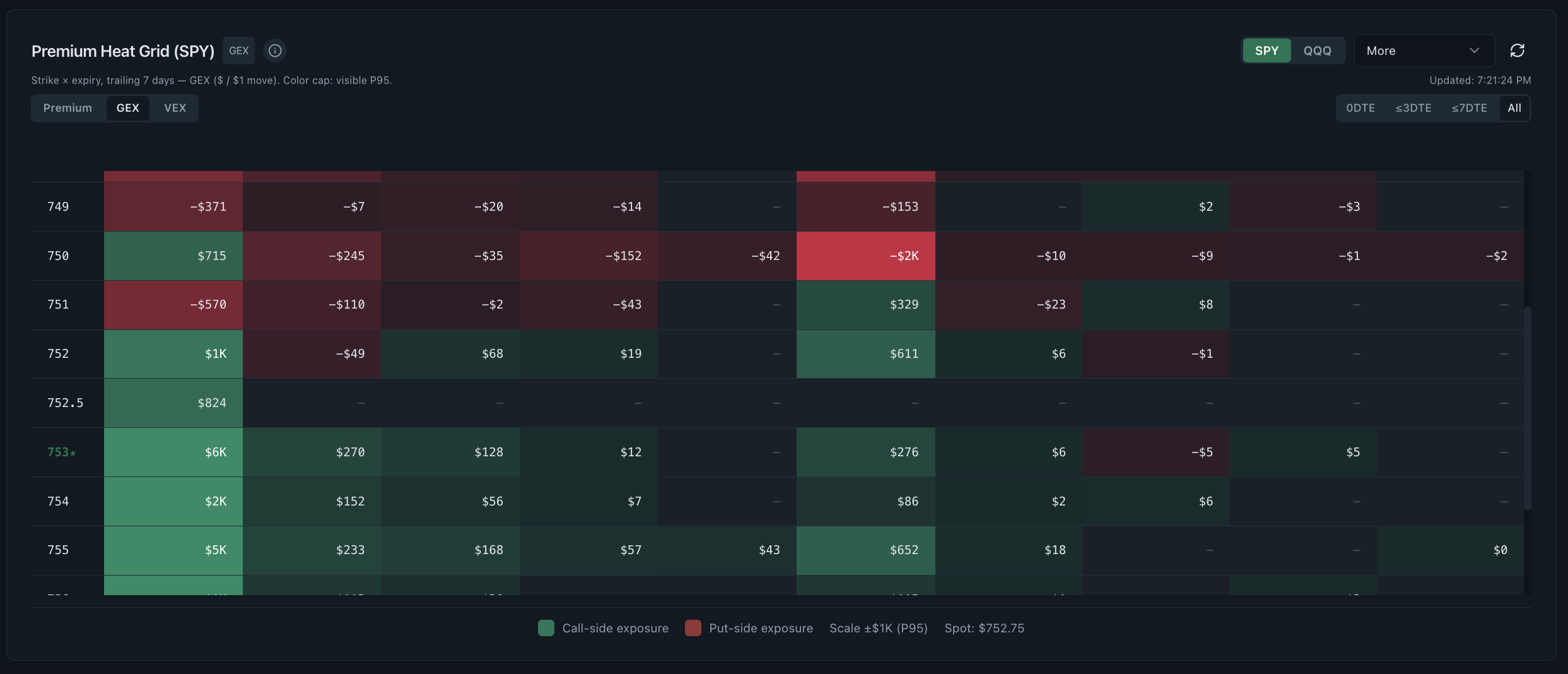
Realtime Options presents call activity as premium and volume concentrations by strike and expiry, alongside price, open interest and news context. Aggressor side is an estimate derived from execution location, not a fact reported by the exchange, and the platform does not label any of it as a signal to act on.
- Observed: contract, size, premium, timestamp and where the trade printed relative to the quote.
- Estimated: whether the buyer or the seller crossed the spread.
- Unknown: the identity of either party, the rest of the portfolio, and whether the print was one leg of a spread.
- Unresolvable intraday: whether the trade added to open positioning, because open interest updates once daily after the close.
- Not provided: alerts framed as recommendations, predicted returns, or any claim about the certainty of intent.
Common questions
What is a call option in simple terms?
A call option is a contract that lets its buyer purchase 100 shares of a stock or ETF at a set strike price until a set expiration date. The buyer pays a premium for that right; the seller receives the premium and must deliver the shares if assigned.
What is the difference between buying a call and selling a call?
The buyer pays premium and holds a right with loss limited to what was paid. The seller receives premium and holds an obligation: if assigned, they must deliver 100 shares at the strike. Selling an uncovered call has theoretically unlimited loss potential.
What is a covered call?
A covered call is a written call backed by 100 shares of the underlying per contract. The writer keeps the premium but gives up gains above the strike and still holds the full downside of the shares. Realtime Options does not screen for covered-call candidates by premium yield.
Can I lose more than the premium on a call?
No for a call buyer. The premium paid is the maximum loss. A call writer can lose more, and an uncovered call has no ceiling on potential loss. This is why brokers require higher approval and additional margin.
When is a call exercised early?
Early exercise of a call is most common the day before an ex-dividend date, when the call is deep in the money and its remaining extrinsic value is smaller than the dividend. Outside that case, early exercise of a call is comparatively unusual because exercising discards remaining time value.
Does heavy call buying mean the stock is going up?
No. Call volume includes hedges against short stock positions, rolls of expiring contracts, covered-call writing, closing trades and market-maker inventory management. Volume records the contract that traded, not the initiator's directional view, so heavy call activity is a research prompt rather than a forecast.
What happens if my call expires in the money?
An in-the-money call is generally subject to automatic exercise under clearing procedures unless you instruct otherwise, which means buying 100 shares per contract at the strike. Confirm your broker's exercise threshold, cut-off time and the buying power required, because those details differ by firm.