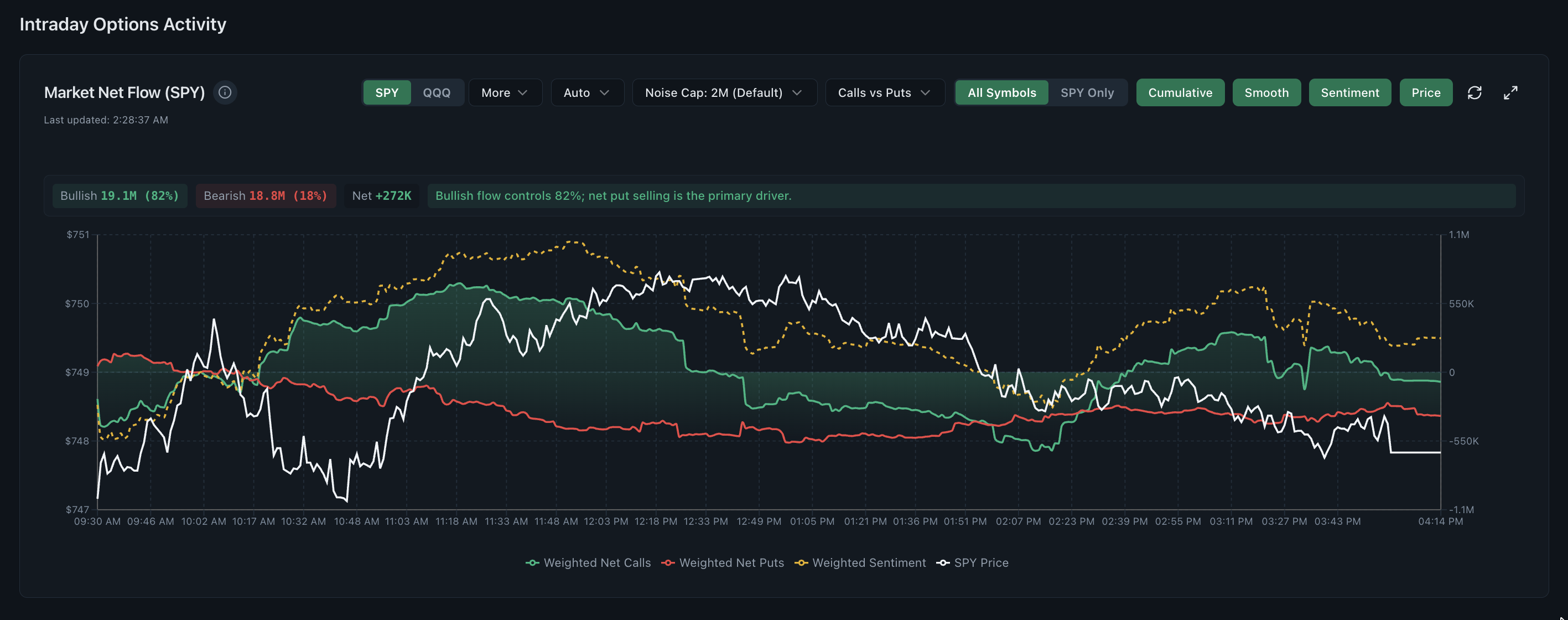


Options sweeps versus blocks
An options sweep is an order filled rapidly across multiple venues or price levels, while a block is a large transaction executed as one reported print or negotiated package. Sweeps emphasize urgency and blocks emphasize size, but neither structure reveals whether the trade is opening, directional or unhedged.
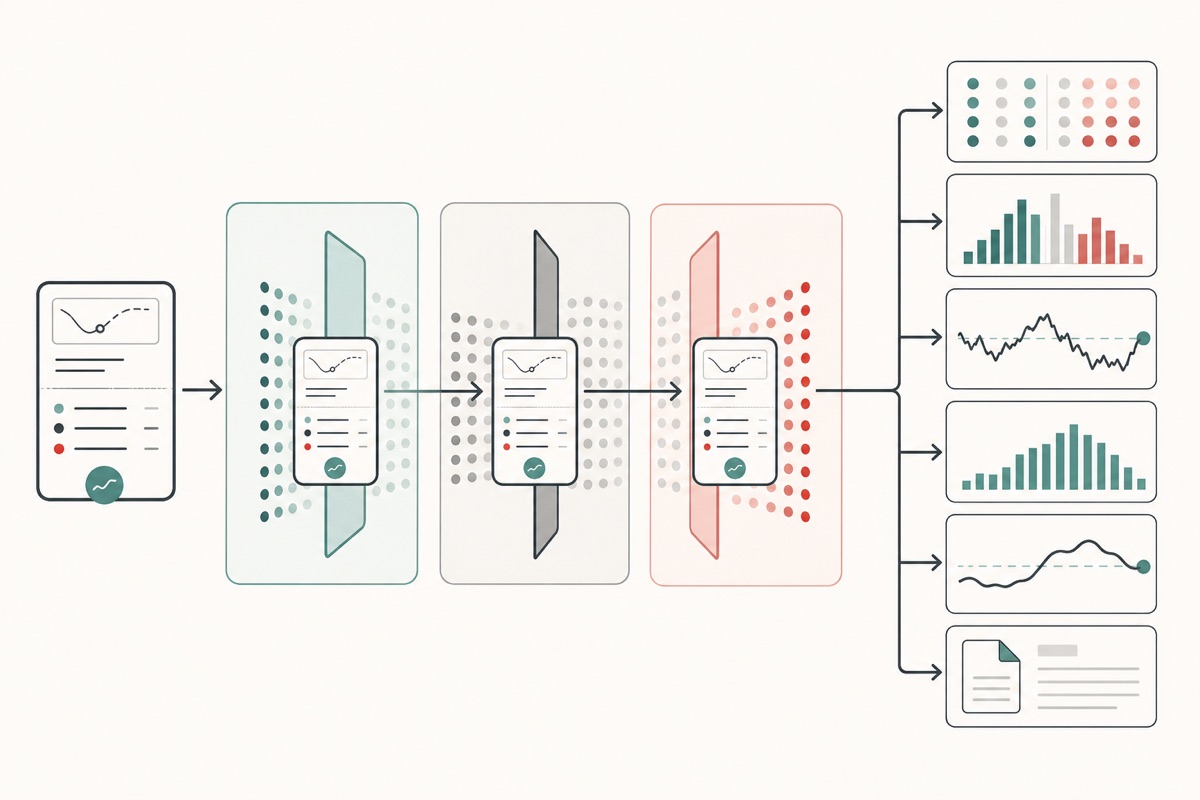
- Sweep
- Fills quickly across venues or prices
- Block
- Large transaction reported as a single print
- Sweep can suggest
- Urgency to complete the order
- Neither proves
- Opening direction, ownership or future price
How the two structures differ
A sweep consumes available liquidity across more than one venue or price, often creating several linked prints in a short window. A block concentrates size in one transaction and may result from negotiated liquidity rather than visible quote-by-quote urgency.
| Structure | What to inspect next |
|---|---|
| Sweep | Timing, venues, execution side, total premium and repeated strike activity |
| Block | Midpoint location, trade count, related legs, open interest and event calendar |
| Repeated smaller prints | Whether they share strike, expiry and direction over time |
| Multi-leg package | Other strikes or expiries printed at the same timestamp |
Why urgency can still be a hedge
A participant may sweep for speed because a hedge is becoming urgent, not because they expect the option itself to gain. A block may be the visible leg of a larger delta-neutral or volatility structure.
Read the supporting context
Execution pattern changes the question you ask; it does not answer the question on its own.
A practical reading sequence
Aggregate linked prints first so one order is not counted several times. Check ask, mid and bid location, search for synchronized legs, compare volume with open interest, and then review price and public catalysts.
Common questions
Are options sweeps bullish?
No. A call sweep can be bought or sold and can serve a hedge, spread, roll or closing transaction. The structure suggests urgency, not guaranteed direction.
Why do block trades often print at the midpoint?
Large or multi-leg orders are often negotiated between participants and liquidity providers, which can place the reported price near the midpoint rather than at the displayed bid or ask.
Can one sweep appear as several trades?
Yes. An order filled across venues or price levels can generate several prints close together. A scanner should group related activity before judging its size.