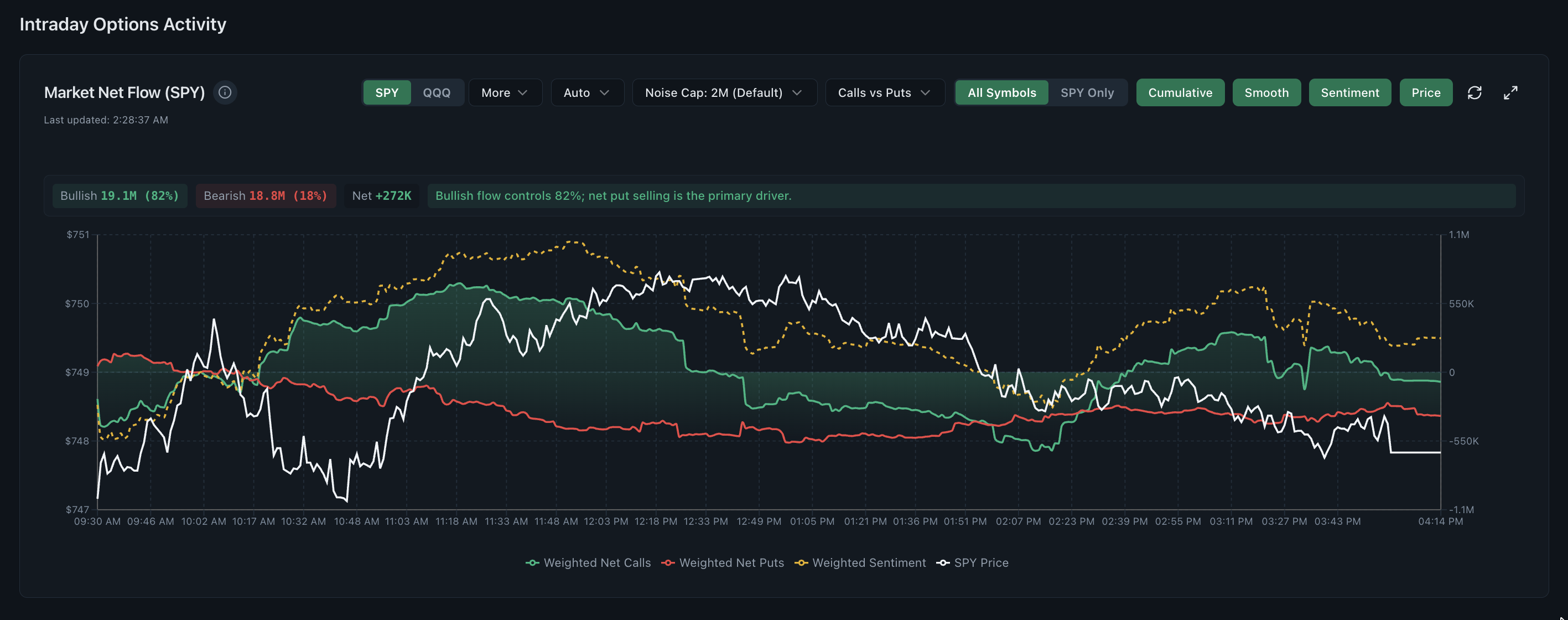


Options volume versus open interest
Options volume is the number of contracts traded during the current session, while open interest is the number of outstanding contracts that remain open after clearing. Volume resets each session; open interest is recalculated after opening, closing, exercise and assignment activity is paired. Comparing the two is useful, but neither measure reveals direction by itself.
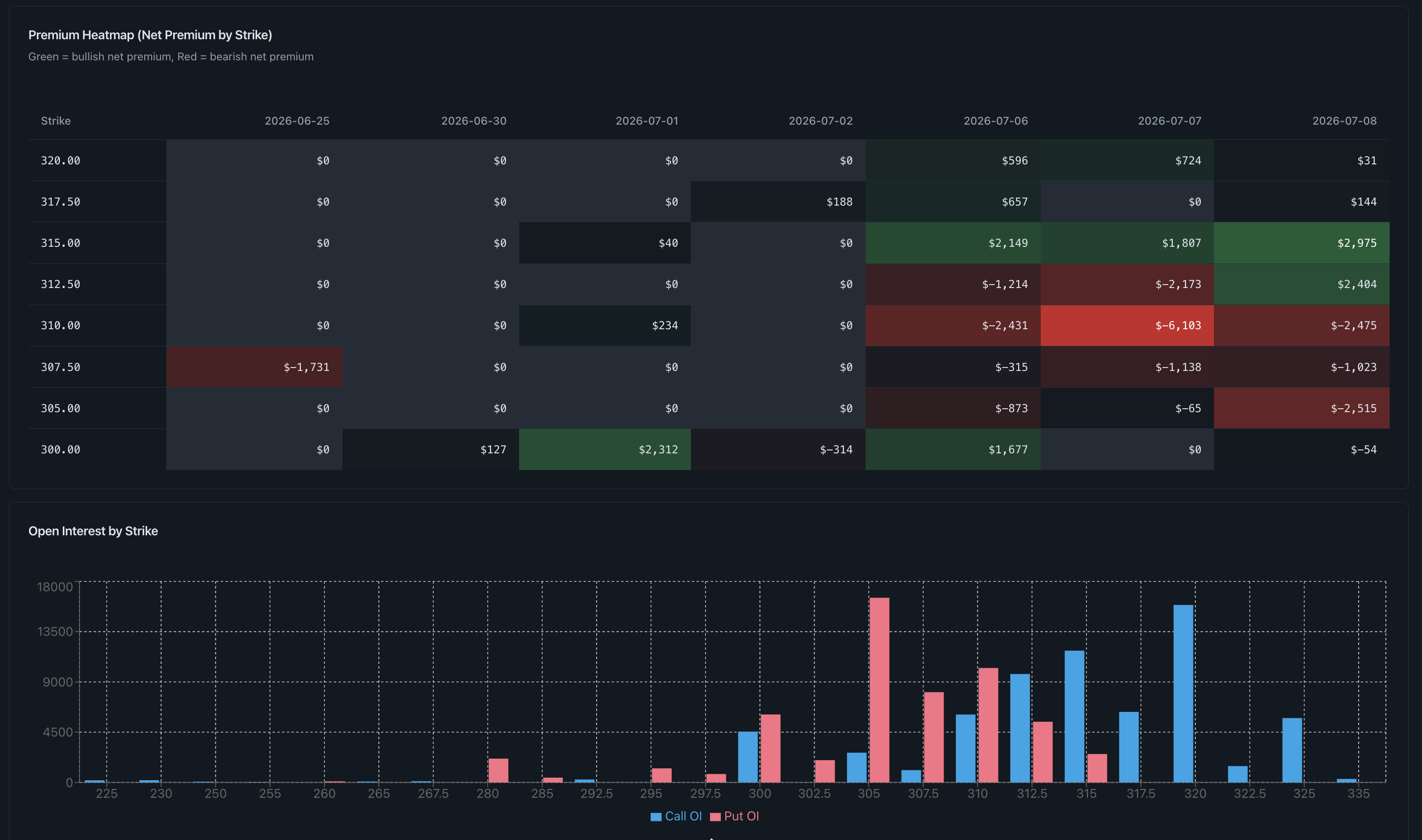
- Volume
- Contracts traded in the current session
- Open interest
- Outstanding contracts after clearing
- Update timing
- Volume intraday; open interest after the close
- Directional meaning
- Neither is bullish or bearish alone
How opening and closing transactions change open interest
Open interest depends on whether both sides open, both sides close, or one opens while the other closes. A trade always has a buyer and seller, but it does not always create a new outstanding contract.
| Buyer and seller status | Open-interest result |
|---|---|
| Both open | Open interest increases |
| Both close | Open interest decreases |
| One opens and one closes | Open interest remains unchanged |
| Exercise or assignment | The exercised contract is removed from open interest |
Why high volume can coexist with a small open-interest change
The same contract can trade several times during a session, and many transactions can transfer an existing position rather than create a new one. A contract may record thousands of volume while the next open-interest figure changes by far less.
Read the supporting context
This is why an intraday statement that a trade definitely opened exceeds what public data can establish.
How to compare volume and open interest responsibly
Use volume to measure current activity and open interest to locate prior outstanding positioning. Then wait for the next published open-interest figure and compare related strikes and expiries before describing the activity as new, closing or transferred.
Common questions
Can options volume be higher than open interest?
Yes. Contracts can change hands more than once during a session, and volume counts every trade while open interest counts only contracts that remain open after clearing.
Is high open interest bullish?
No. Each open contract has a long and short side. Open interest measures outstanding participation, not the direction or purpose of the position.
When is options open interest updated?
OCC calculates open interest after exchanges report opening and closing activity and after exercise and assignment are processed. It is not an intraday real-time measure.