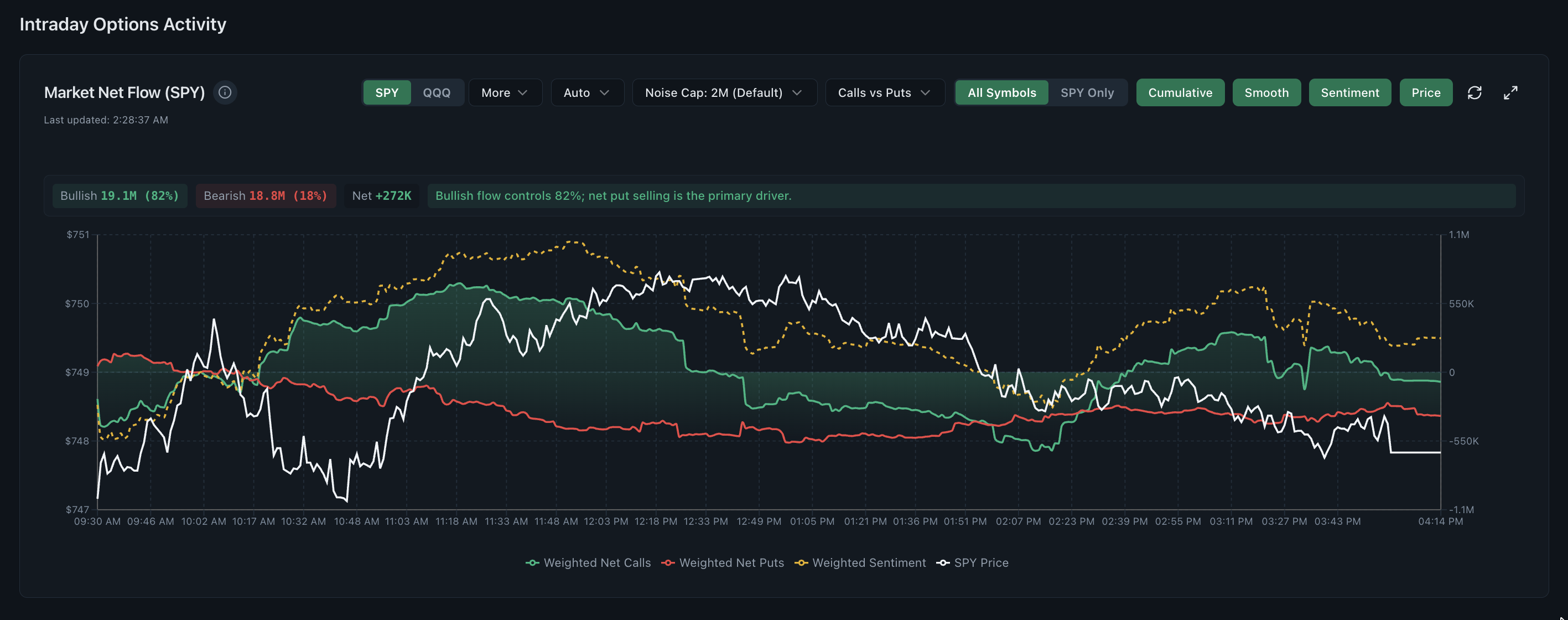


What is options flow?
Options flow is the record of executed options trades organized to show where contract activity and premium are concentrating. A useful flow view includes ticker, call or put, strike, expiry, size, premium, timestamp and execution location relative to the bid and ask. It describes activity that happened; it does not reveal trader identity, purpose or future price with certainty.
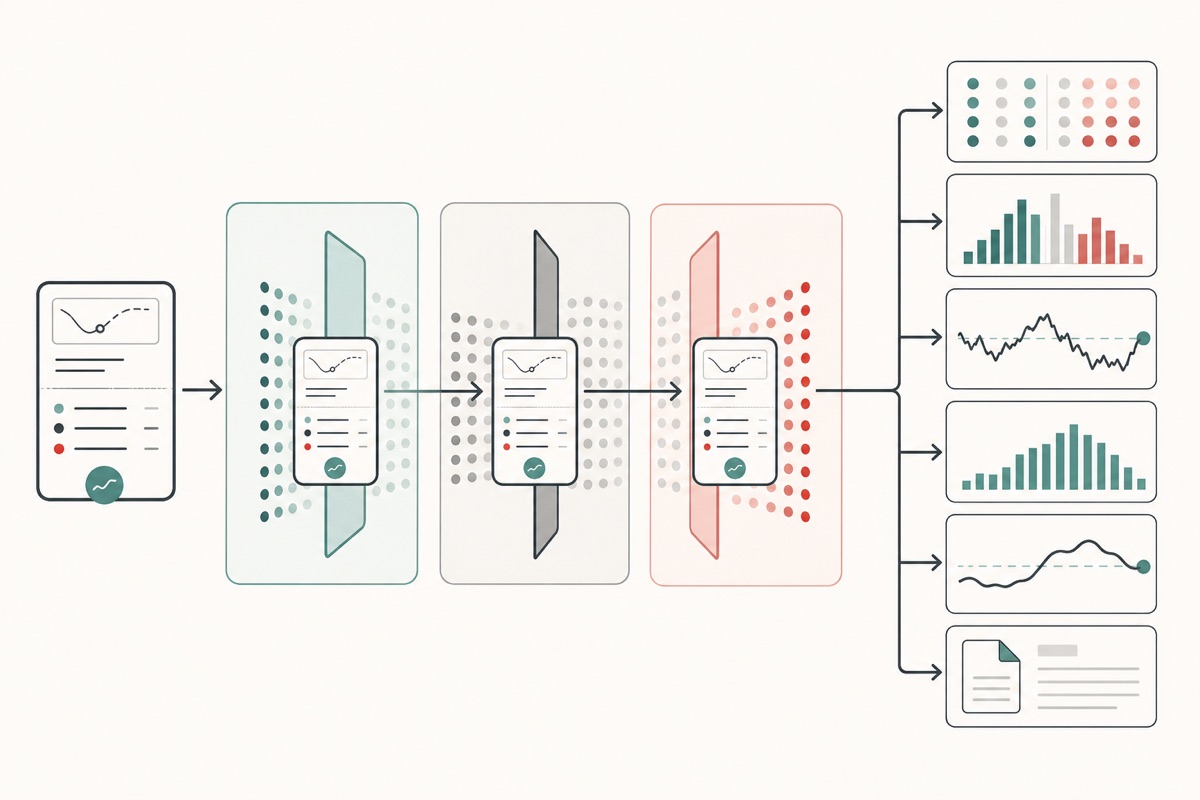
- Observed
- Trade, timestamp, contract, size and price
- Estimated
- Aggressor direction and derived sentiment
- Missing
- Owner, full position, hedge and intent
- Best practice
- Read flow with chain, price and news context
The fields inside an options-flow print
Every print starts as an executed contract, not a bullish or bearish story. The exchange-reported facts identify the option series and transaction; analytics add classifications that make a large stream easier to scan.
- Underlying ticker, call or put, strike and expiration date.
- Execution timestamp, contract quantity and option price.
- Premium, normally option price multiplied by contracts and the 100-share multiplier.
- Bid, ask and midpoint at the time of the transaction when quote context is available.
- Volume, trade count and the latest published open interest for the series.
What ask-side and bid-side labels mean
A trade near the ask is commonly classified as buyer-aggressive, while a trade near the bid is commonly classified as seller-aggressive. Midpoint executions are less directional and often appear in negotiated or multi-leg activity.
Read the supporting context
These labels estimate who crossed the spread; they do not reveal whether that person opened or closed, held the underlying, traded another leg or used the option as a hedge.
Why context changes the interpretation
The same large call can be a new directional position, a closing sale, the long leg of a spread or protection against a short underlying position. Price, repeat activity, open-interest changes, related strikes and a known catalyst can eliminate some explanations, but rarely prove one.
Read the supporting context
That is why Realtime Options places weighted market flow, ticker rankings, heat grids, open interest, contract history and news in one workflow rather than publishing a bare alert feed.
Common questions
Is options flow the same as options volume?
No. Volume is the number of contracts traded during a session. Flow organizes those trades by contract, premium, estimated side, time and other context.
Can options flow identify institutional trades?
Size and execution pattern can suggest professional activity, but public prints do not identify the beneficial owner. Avoid calling every large trade institutional or smart money.
Does options flow predict price?
No. It describes executed activity. The same visible print can serve different portfolio purposes and lead to different outcomes under different market conditions.