

Dark pool data versus options flow
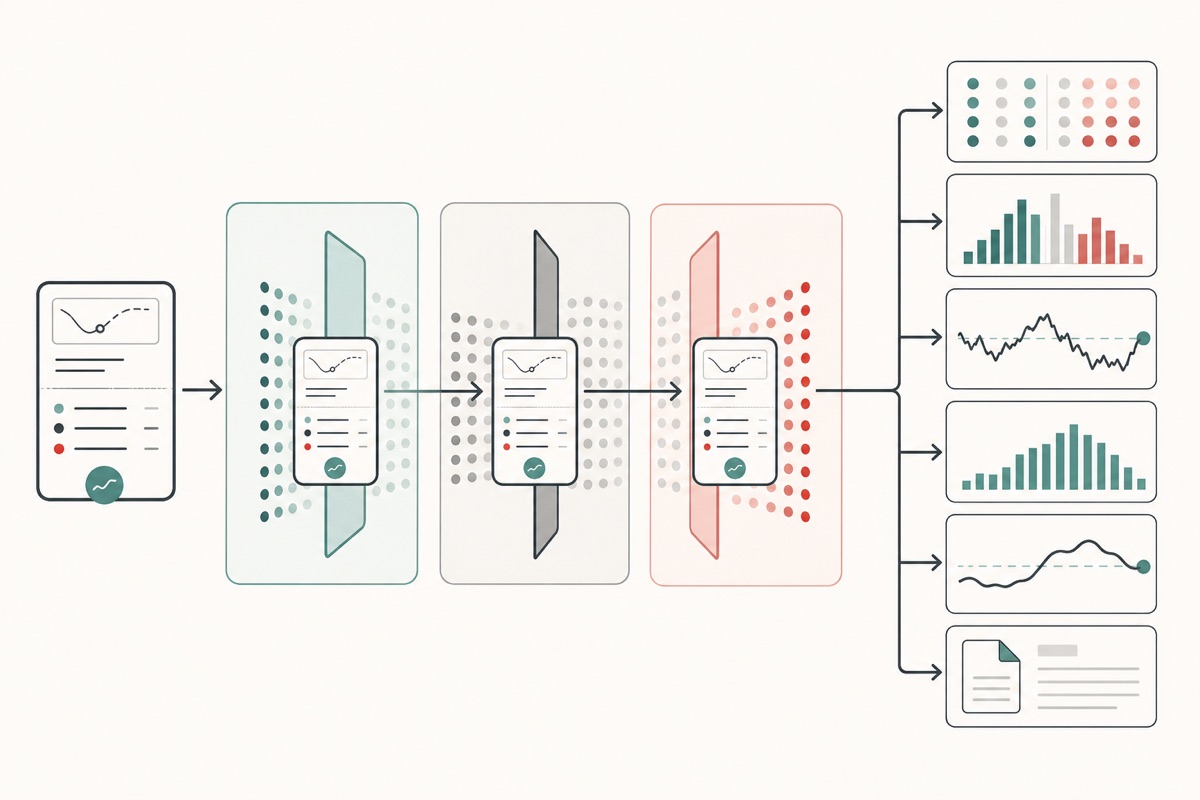
Dark-pool data and options flow describe different markets. Dark pools are off-exchange venues used for equity trades, while options flow organizes executed listed-options activity by contract, strike, expiry, premium and execution. They can be compared around the same ticker, but one does not decode the ownership or intent behind the other.
- Dark-pool instrument
- Primarily equity shares traded off exchange
- Options-flow instrument
- Listed option contracts executed on options exchanges
- Shared field
- Underlying ticker and timestamp context
- Cannot establish
- Beneficial owner, full portfolio or future price direction
What dark-pool data shows
FINRA describes dark pools as alternative trading systems that do not display pre-trade order information like a traditional exchange. Executed listed-stock trades still have reporting obligations, and FINRA publishes equity ATS volume statistics after a delay.
Read the supporting context
A dark-pool print therefore shows completed equity activity, not a secret order book and not an options position. Size and location can be useful context, but the public print does not expose the entire strategy behind it.
What options order flow shows
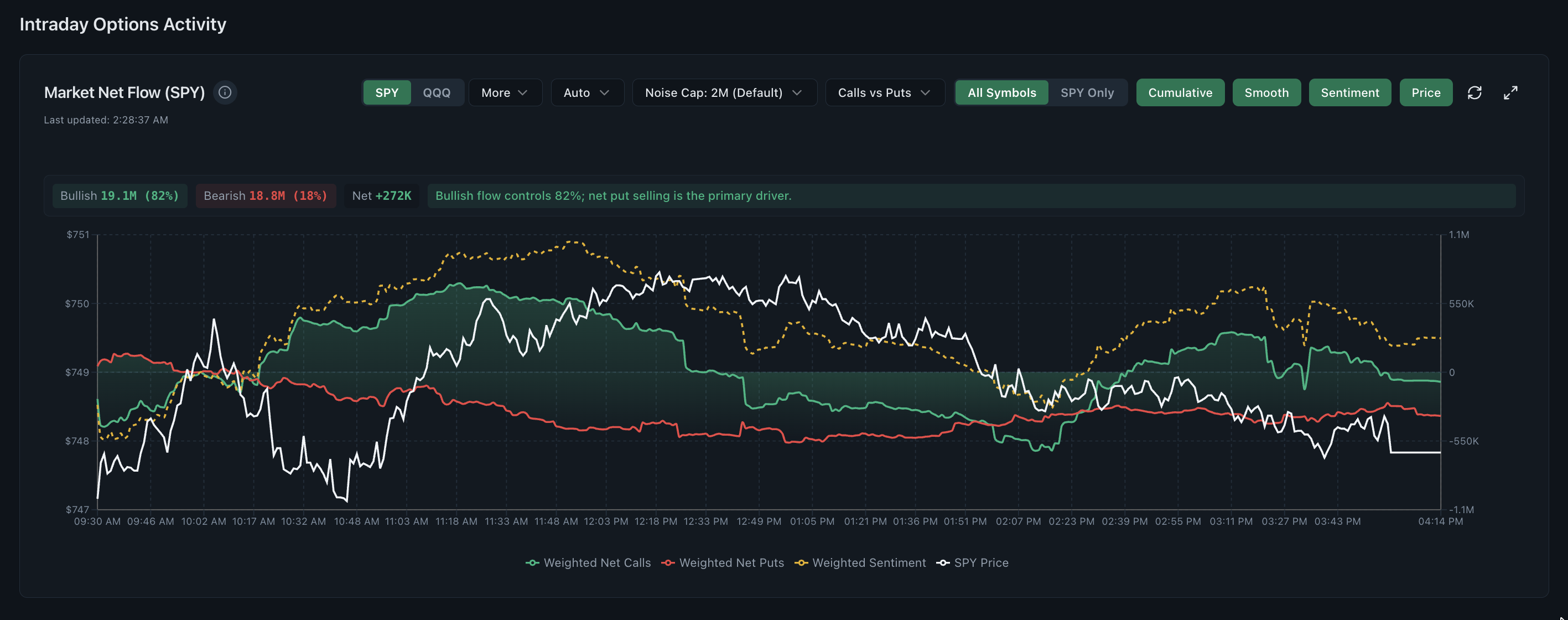
Options order flow starts with executed option contracts. A record can include the underlying, call or put, strike, expiration, size, premium, timestamp and the execution price relative to the prevailing bid and ask.
Read the supporting context
Classifications such as bullish, bearish or aggressive are interpretations. A call near the ask may be a purchase, but it can still be part of a spread, hedge, roll or position closing elsewhere.
How to compare dark pools and options flow responsibly
Use the datasets as separate observations around the same underlying. Time alignment, price response and repeated activity can support a research note, but coincidence does not prove a shared institution or coordinated position.
- Identify the instrument first: shares versus option contracts.
- Record when each trade became public and whether the data source is live, delayed or aggregated.
- Compare equity price, options strikes, expiration, premium and open interest without inventing a common owner.
- Check for earnings, index rebalancing, hedging and other catalysts that could explain both datasets.
- Treat missing dark-pool coverage as a product boundary, not evidence that options flow is incomplete.
Does Realtime Options include a dark-pool scanner?
No. Realtime Options does not currently provide dark-pool prints or a dark-pool scanner. The product focuses on options flow, premium, Greeks, GEX, open interest, price, history and news. Choose a competitor with an equity dark-pool product when that dataset is essential.
Common questions
Is dark-pool data the same as options flow?
No. Dark-pool data generally describes equity trades executed through off-exchange venues, while options flow describes executed listed-option contracts.
Can dark-pool prints confirm an options-flow trade?
They can add ticker and timing context, but they cannot prove common ownership, direction or intent. The trades may belong to unrelated participants or separate portfolio structures.
Which options-flow tools include dark-pool data?
Unusual Whales, Cheddar Flow and FlowAlgo publicly list dark-pool products, and Flowtopia uses dark-pool language on its public site. Verify current plan inclusion before purchasing.